

 Christianity Catholic
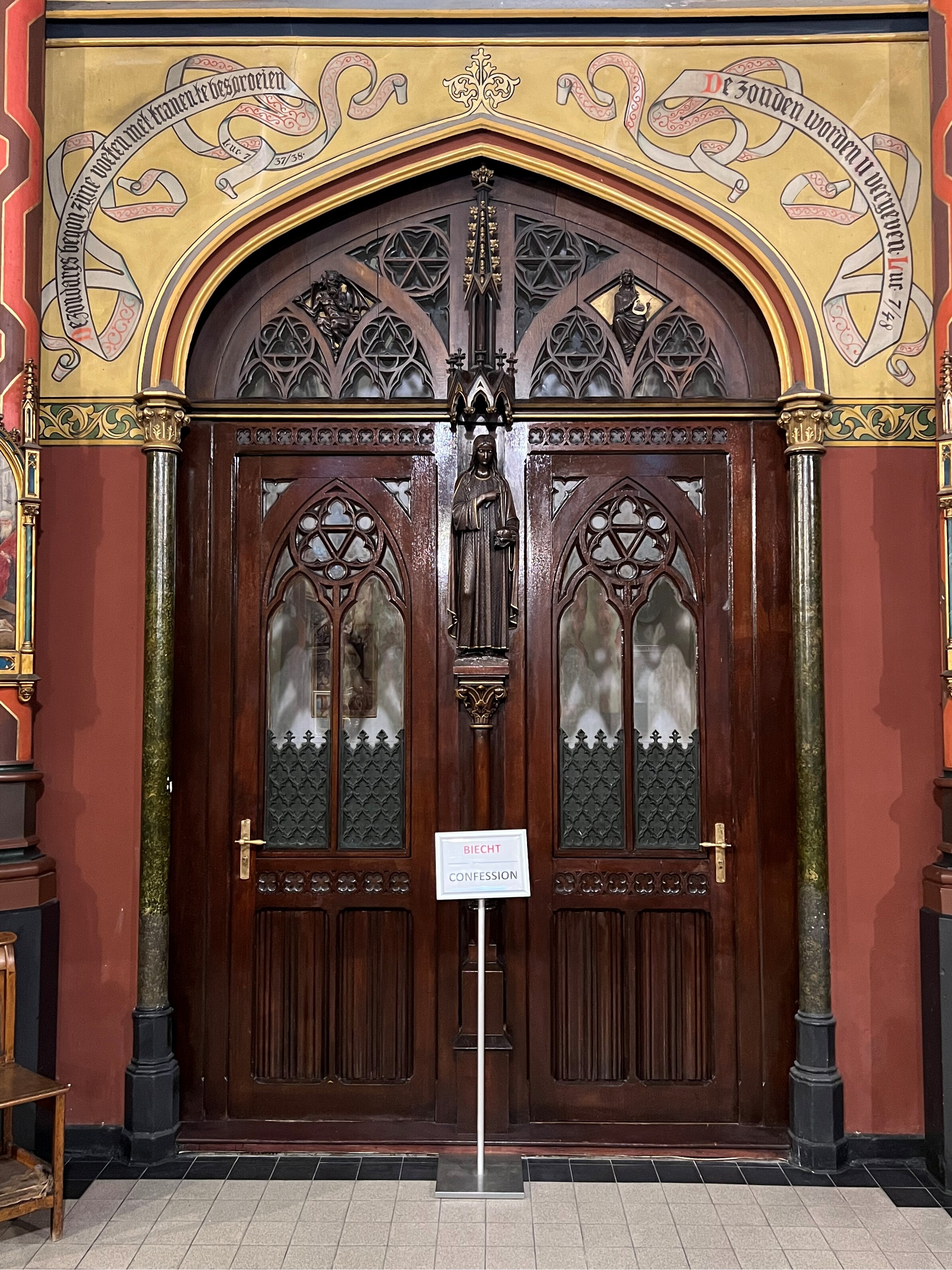
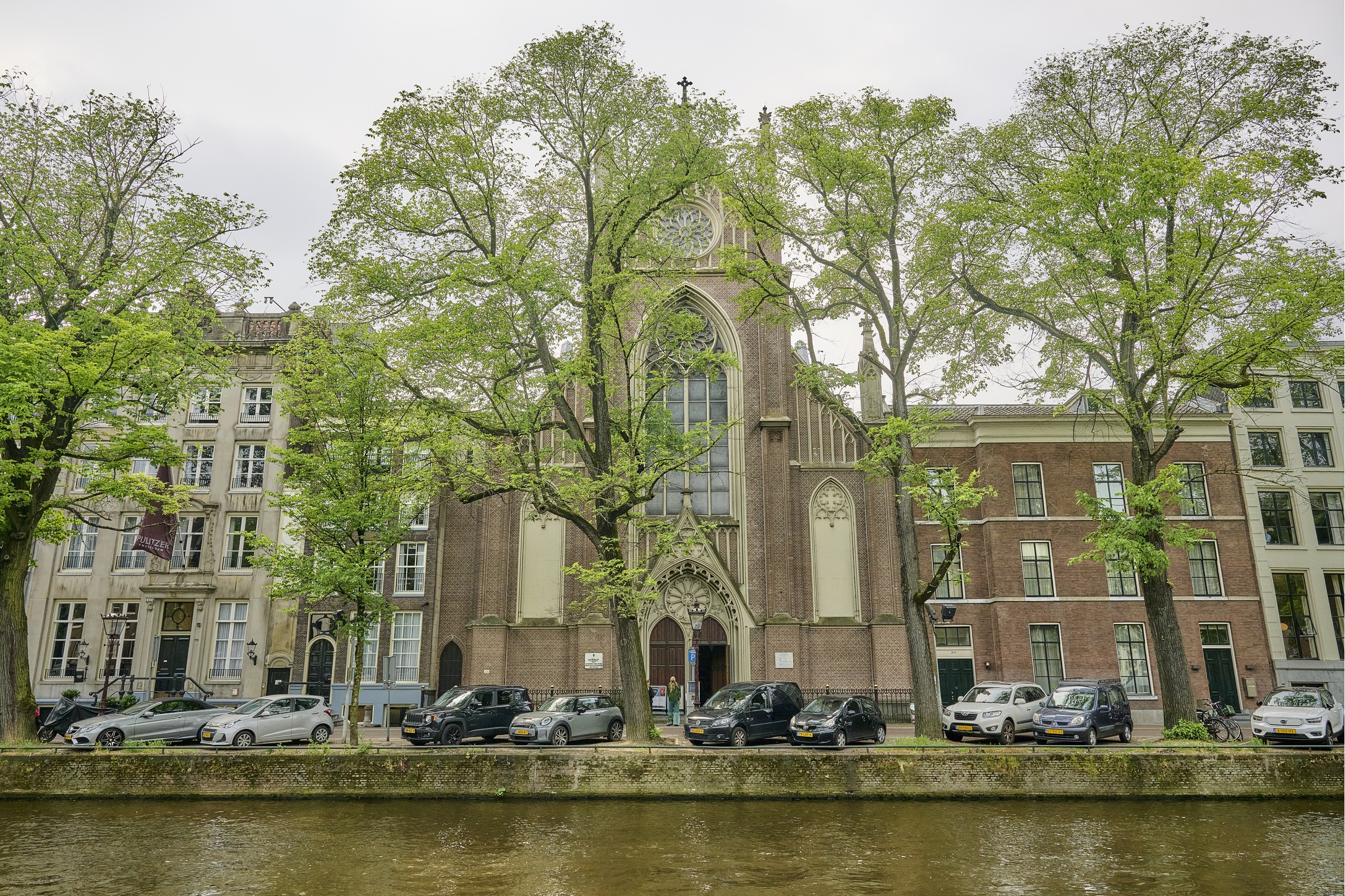
This richly decorated church at Keizersgracht is known in nineteenth century Amsterdam as the city’s main church for confession. According to a newspaper report from 1850, the priests specialise in “difficult cases.”
Location
Church of Our Lady
Keizersgracht 220
Type
Church
Religious community
Roman Catholic Church
Object
Richly decorated confessionals built into the side aisles of the church.
Maker and date
Atelier Cuypers-Stoltzenberg
1857
Visit
The confessionals can be viewed during opening hours and before and after liturgical services.
Current interior
Current exterior
Redemptorists: Amsterdam’s Confessors
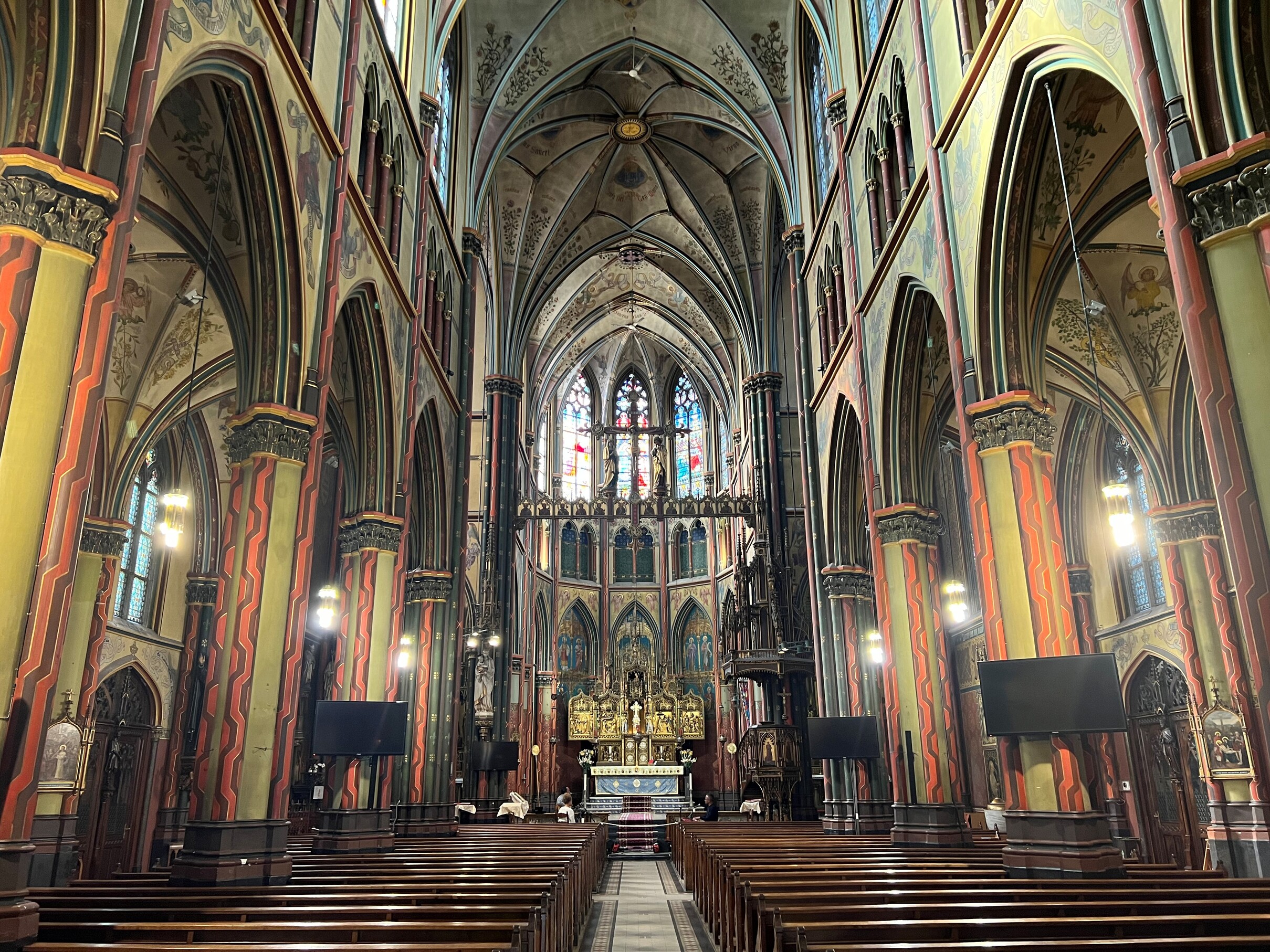
Today, the Church of Our Lady (Onze Lieve Vrouwekerk), also known as the Mother of God Church (Moeder Godskerk), is used by both Syriac Orthodox and Roman Catholic worshippers. The church was originally commissioned by the Redemptorists. In 1985, they leave the church due to the declining number of brothers and priests. However, their former presence is still clearly visible in the church’s current interior.
The Congregation of the Most Holy Redeemer, known as the Redemptorists, is founded in 1732 by the Italian saint Alphonsus Liguori. Their principal aim is to promote faith and devotion among the most neglected members of society. From the mid-nineteenth century onwards, they are also active in Amsterdam. By (re)introducing devotional practices, such as devotion to Our Lady of Perpetual Help, praying the rosary, and establishing Stations of the Cross, they have a major influence on local Catholic religious life. Hearing confessions is also one of the fathers’ principal duties.
Saint Alphonsus Liguori
Saint Alphonsus de’ Liguori founded the Congregation of the Most Holy Redeemer. The members of this community called themselves Redemptorists. Their goal was to proclaim the Good News to the poor. Alphonsus devoted himself entirely to popular missions and to writing works on moral theology. Pope Gregory XVI canonized him on May 26, 1839. In 1871, Pope Pius IX proclaimed him a Doctor of the Church. Since 1950, he has been the patron saint of confessors and moral theologians. His feast day is celebrated on August 1. (Source: kro-ncrv.nl)
Our Lady of Perpetual Help
Title of a popular and frequently venerated image of the Virgin Mary with Jesus.
Rosary
The Rosary is the name of a prayer based on 150 Hail Marys; the name “rosary” is also used for the string of beads used in praying the prayer. A rosary consists of five groups of ten small beads, known as “decades.” The decades are separated from one another by larger beads, five in total. A Hail Mary is prayed on each small bead, and an Our Father on each large bead. At the beginning of each decade, the person praying the Rosary meditates on a so-called mystery of faith. These mysteries concern events from the lives of Jesus and Mary. (Source: kro-ncrv.nl)
Stations of the Cross
The Stations of the Cross is a religious devotion in which believers move along the fourteen depictions of Christ’s Passion. Through prayer and song, believers reflect on Christ’s suffering by symbolically following the path—the “Way of the Cross”—that he took on the day of his death. (Source: kro-ncrv.nl)
Confession
In Catholicism, confession is considered a sacrament instituted by Christ in which forgiveness of sins committed after baptism is granted through the priest's absolution to those who with true sorrow confess their sins.
Congregatio Sanctissimi Redemptoris
Roman Catholic missionary congregation of the Most Holy Redeemer (i.e. Jesus Christ), founded in 1732 by Saint Alphonsus Liguori.
Our Lady
A term of affection for Mary, the mother of Jesus Christ, often used by Catholics. Other popular titles for Mary include Mother of God and the Blessed Virgin.
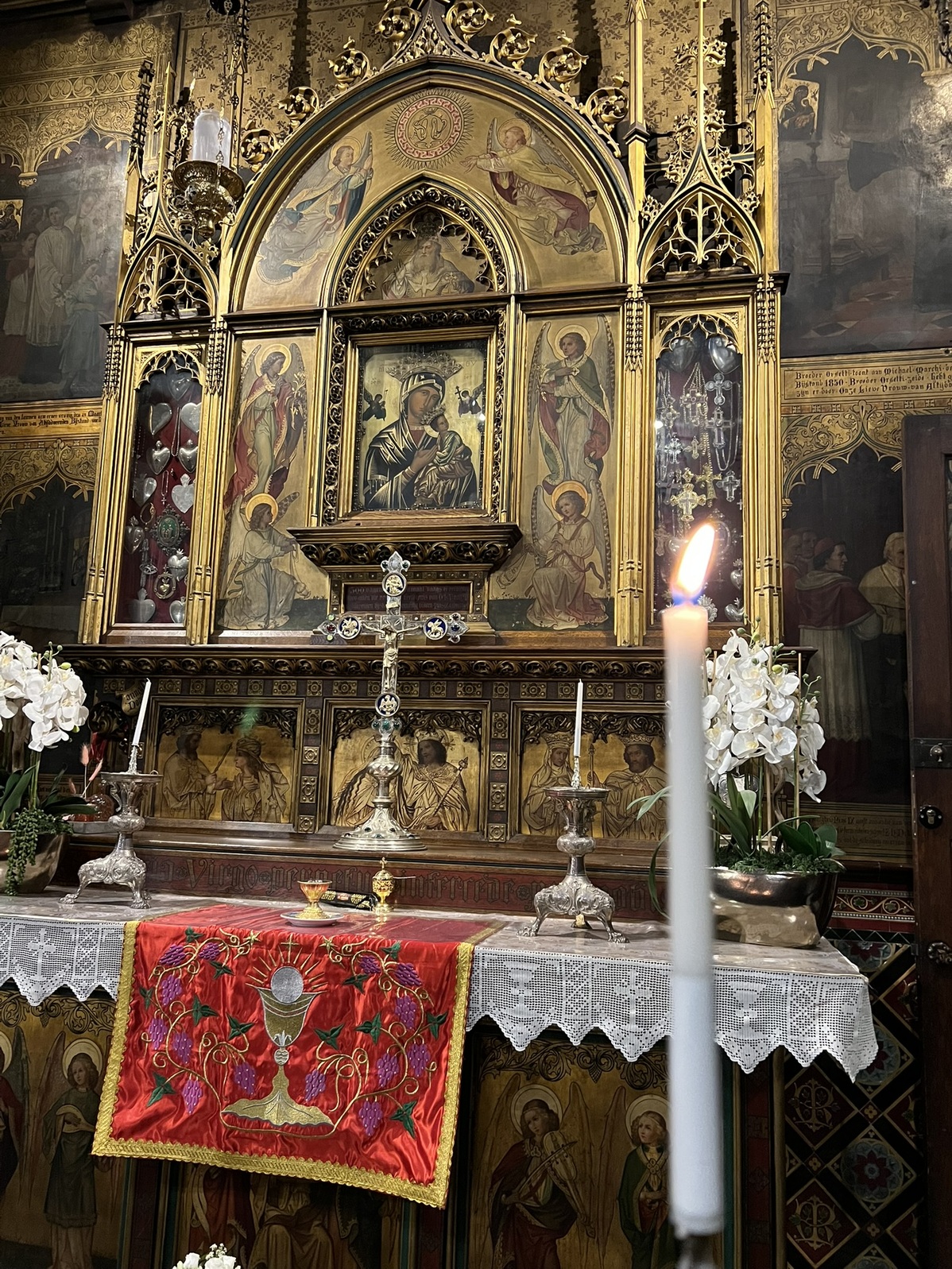
The altar with the icon of Our Lady of Perpetual Help in the Church of Our Lady. Devotion to Mary, as depicted in this icon, is characteristic of Redemptorist spirituality.
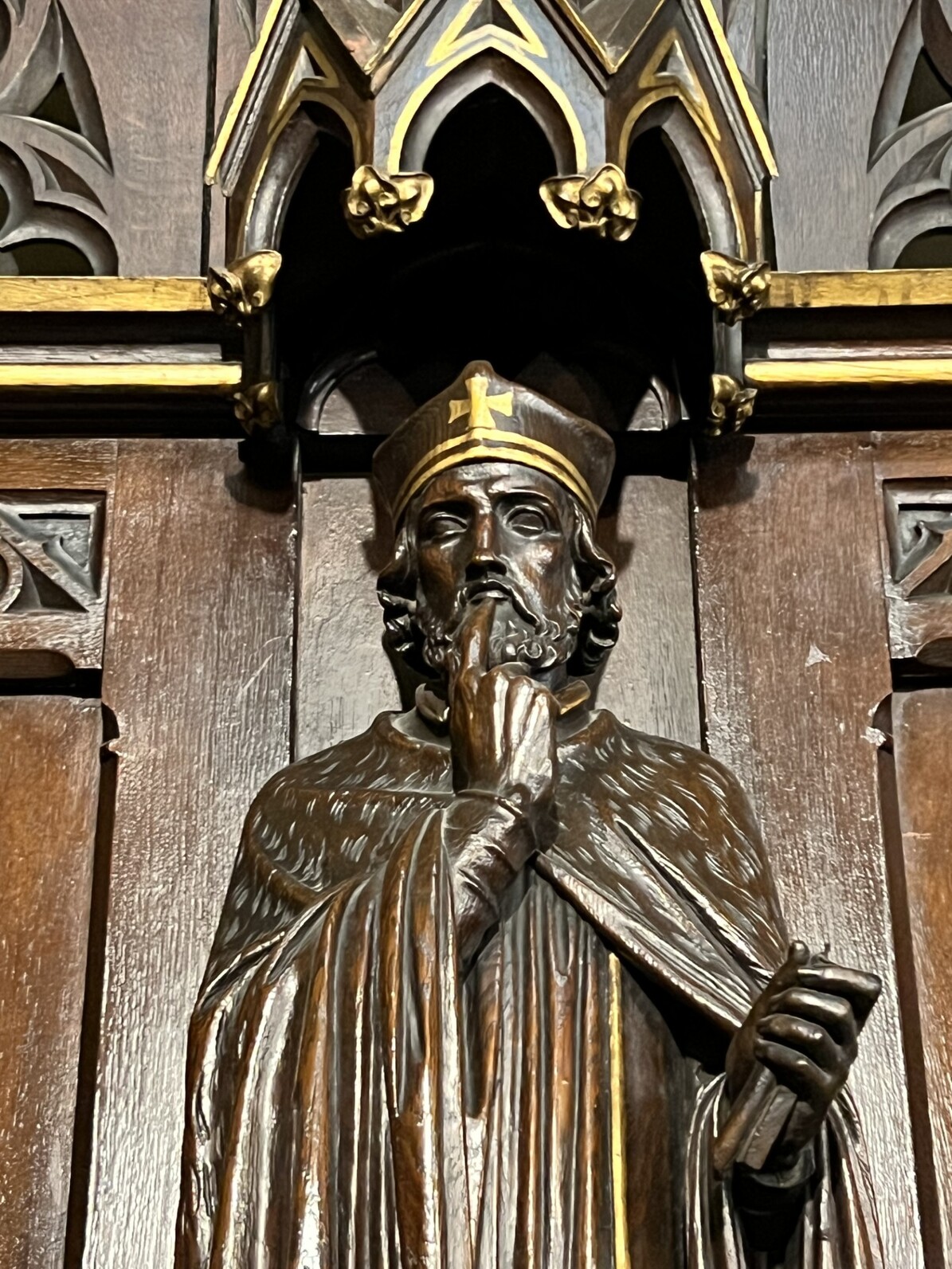
Detail of the statue of St. John of Nepomuk at one of the confessionals. St. John of Nepomuk is the patron saint of confessors. He holds his index finger to his lips, symbolising his commitment to maintaining the seal of confession.
From the beginning, the Church of Our Lady must have had a large number of priests hearing confessions, which also explains the unusually large number of confessionals: ten in total, one of which later makes way for a new side altar. An article in De Tijd dated 11 November 1850 emphasises the church’s unique role in the city: “Above all, it is the city’s great confession church. In that double row of confessionals […] many things have, over the course of time, been made right with Our Lord. For the Redemptorist Fathers specialise in ‘difficult cases,’ although as confessors they have a reputation for not being particularly lenient.”
The confessionals are decorated with references to repentance, confession, and forgiveness. However, these elements are not merely decorative, but offer the faithful inspiring examples and moral lessons that encourage them to make a good confession. Each confessional features a statue of a saint, while above each door a virtue or a vice is depicted. Appropriate biblical passages are displayed on the wall above the confessionals.
The Roman Catholic community of the Church of Our Lady has been entrusted to Opus Dei since 1985. They continue the church’s tradition as Amsterdam's church for confession.
Click the “Read more” button below to read what the people going to confession see while they are waiting at the confessionals.
Saint
A Saint is a person who has led an exceptionally holy and virtuous life and is believed to be in heaven. The life of a saint serves as an example for others to follow. Believers pray to the saints and ask them to intercede with God on their behalf.
Confession
In Catholicism, confession is considered a sacrament instituted by Christ in which forgiveness of sins committed after baptism is granted through the priest's absolution to those who with true sorrow confess their sins.
Confessional
An enclosed space intended for confession. The space usually has a partition with a grille or other form of separation. One side is intended for the priest and the other for the person making confession. Sometimes the confessional is not a separate room, but a piece of furniture in the church where the priest sits and the penitent can kneel at the sides.
Opus Dei
Opus Dei (Latin: “Work of God”) is an organization of the Roman Catholic Church. Its aim is to contribute to the Church’s mission of evangelisation, particularly by spreading the awareness that everyone is called to holiness and that ordinary activities have a sanctifying value. Opus Dei was founded on 2 October, 1928, by Saint Josemaría Escrivá.
Our Lord
Title for Jesus Christ.
Pieter-Jan van Giersbergen
Curator Collections Our Lord in the Attic Museum
Last edited
September 08, 2026
Confessional of Saint Mary Magdalene, Cuypers-Stoltzenberg Workshop, 1857. Collection of the Moeder Godskerk, Amsterdam. Photograph by Our Lord in the Attic Museum.
Exterior: photograph by Robert Westera.
Interior: photograph by Museum Ons’ Lieve Heer op Solder.
Icon of Our Lady of Perpetual Help, unknown maker, undated, copy of the icon in Sant’Alfonso all’Esquilino, Rome. Collection of the Moeder Godskerk, Amsterdam. Photograph by Our Lord in the Attic Museum.
Detail Confessional of Saint John of Nepomuk, Cuypers-Stoltzenberg Workshop, 1857. Collection of the Moeder Godskerk, Amsterdam. Photograph by Our Lord in the Attic Museum.
Bakker, M., Onze Lieve Vrouwekerk. Een herboren Monument aan de Keizersgracht (Amsterdam 1998).
Hoogveld, C.J.W.A., Een monument van de katholieke emancipatie : de redemptoristenkerk het ’ Onbevlekt Hart van Maria ’ te Amsterdam (Amsterdam 1983).
Online sources
Website Onze Lieve Vrouwekerk
Last visited 10-08-2026