

 Christianity Protestant
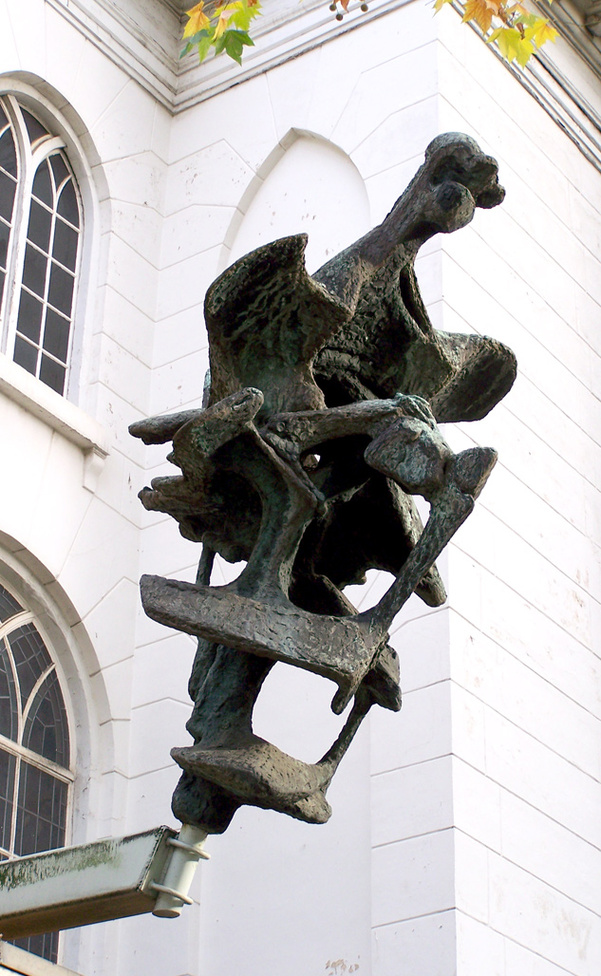
In 1955, the artist Wessel Couzijn made a sculpture to commemorate a leading figure in Dutch aviation, but instead of fulfilling its original intended function, the bronze statue found its place on the facade of a newly built Mennonite church in Slotermeer.
Location
De Olijftak
Arthur van Schendelstraat 17
Type
Church
Religious community
Mennonite Church
Object
Expressionistic sculpture of a bird-like figure
Maker and date
Wessel Couzijn
1955
Visit
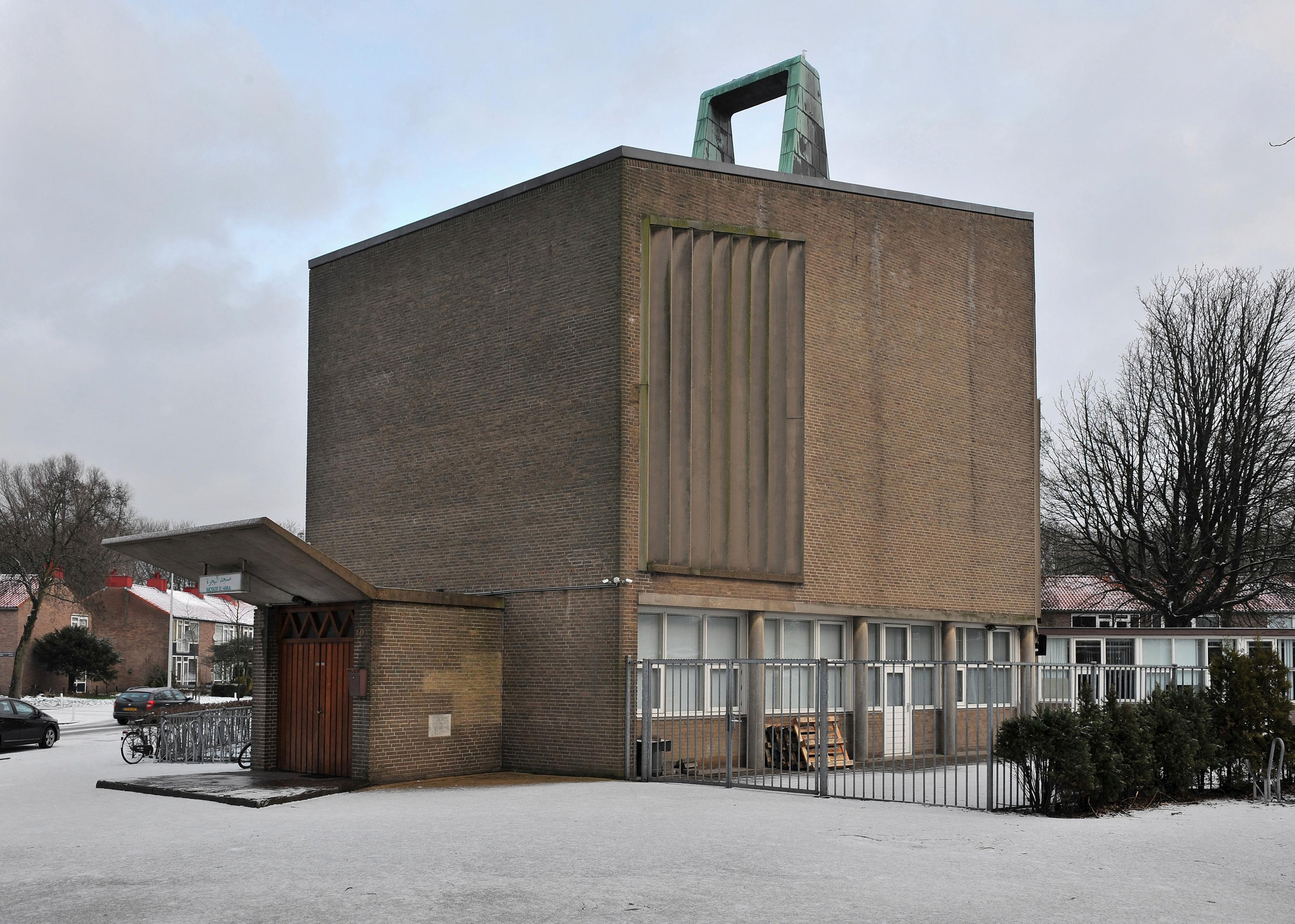
The Olijftak Church is now the El Hijra Mosque. The sculpture is now located at the rear of the Singelkerk, between Herengracht 429 and 433
Current exterior
Vliegend/Vogel Finds its Home at the Olijftak
The Mennonite church called the Olijftak was opened in Amsterdam-Slotermeer on 28 October 1956. This modern building designed by architect Karel Sijmons – also known for the Thomaskerk in Amsterdam – has a sober interior with a brick and concrete exterior. Two years after the church’s opening, the minister Henk Bremer coordinated the purchase of the bronze sculpture Vliegend/Vogel by Dutch sculptor Wessel Couzijn (1912-1984) for the gable of the building’s exterior wall.
While this statue has long been in ownership of Amsterdam’s Mennonite congregation, it was by no means purpose-made for display on a church. The sculpture was actually intended to commemorate Dutch aviation innovator and (later) KLM president Albert Plesman (1889-1953). The sculptors Han Richters, John Raedecker, Albert Termote, and Couzijn were approached to submit designs for this monument following Plesman’s death. However, the committee tasked with organizing the commission ultimately approached Mari Adriessen for the project instead. Rather than an abstract artistic reflection on flight, they chose for a figurative statue of Plesman.
Minister Bremer had initially asked Couzijn whether he could make a statue of John the Baptist. While Couzijn was not interested in taking on the project, he suggested some other artists who might be able to fulfill the commission. In the course of discussions, Bremer instead became interested in the abstract bird-like sculpture that he had seen in Couzijn’s studio – even though Couzijn reminded him that he had made it for an “airport”. The church board came to see it in the studio and gave their approval.
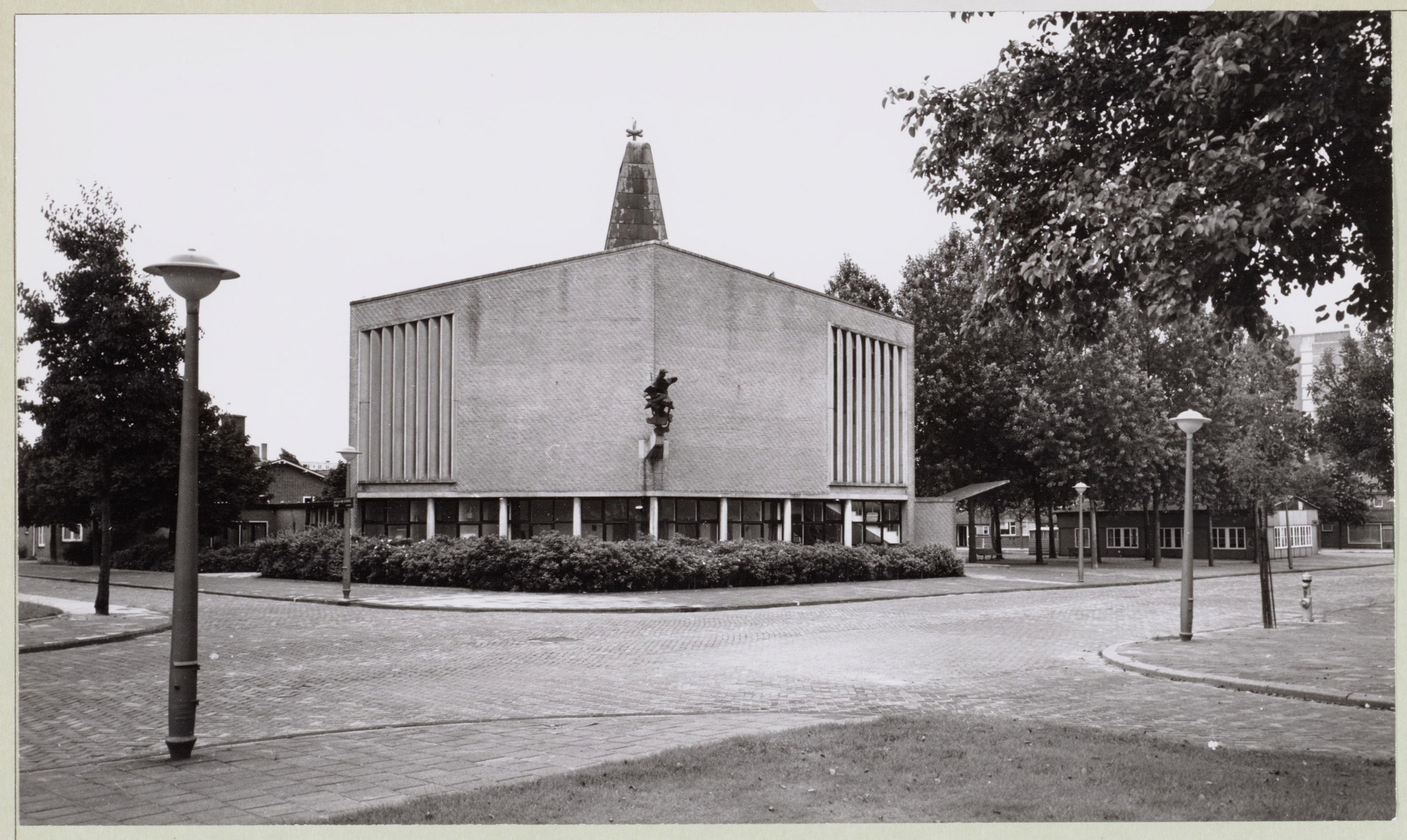
In this 1972 photograph of the façade of De Olijftak, the original location of the sculpture Vliegend/Vogel can be seen.
The Olijftak in Nieuw-West was one of several new neighbourhood-based places of worship built to accommodate Amsterdam’s Mennonite congregation in the twentieth century – the others being the Oosterparkkerk in East (1904-1975), and the Wijkgebouw on the Karperweg in Oud Zuid (1928-2010). For some time, services were also held at the Menno Simonshuis old folks' home in Buitenveldert. Due to changing congregational priorities, the services in the twentieth-century buildings were eventually stopped and congregational life was consolidated around the ongoing activities in the Singelkerk (1608-present) and Meerpadkerk in Noord (1843- present). The Olijftak was sold to the Dutch Reformed Church [Gereformeerde Kerk] who used it from 1969 to 1993. Thereafter, it remained empty until it was adapted for its present use as the El Hijra Mosque. In 1996, Vliegend/Vogel was moved to its current location above the doors to the Singelkerk on the Herengracht side.
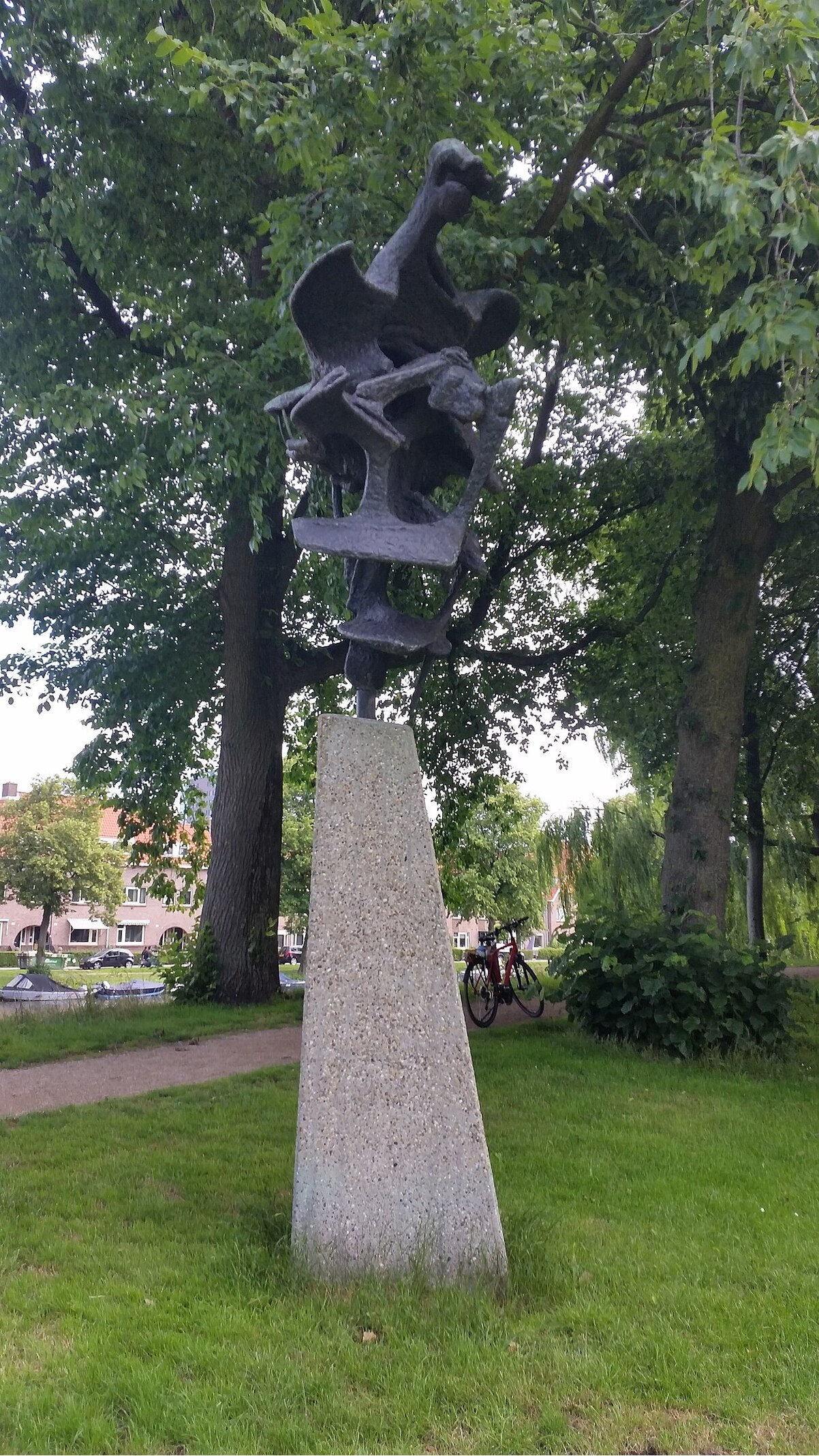
Amsterdam is not the only place this composition by Couzijn can be admired: a second casting made in 1964 was purchased by the city of Haarlem and installed outdoors on the Prinsen Bolwerk.
Nina Schroeder-van 't Schip
Art Historian & Mennonite Heritage Specialist Doopsgezind Amsterdam
Last edited
March 26, 2026
Vliegend/Vogel, Wessel Couzijn, 1955, bronze. Collection of Doopsgezind Amsterdam.
Exterior: City Archives Amsterdam
Burgemeester Rendorpstraat, Kerk "De Olijftak", met lantaarnpalen en brandkraan, unknown photographer, July 1972. City Archives Amsterdam: Archief van de Dienst Ruimtelijke Ordening: foto's afdeling B.
Vliegend/Vogel, Wessel Couzijn, 1964, bronze, second casting. Collection of the Municipality Haarlem. Photography: Wikimedia Commons.
Algemene Doopsgezinde Sociëteit, Doopsgezind Jaarboekje (1957) 30-33.
Boelema, I. (ed.), Wessel Couzijn, Weesp: Stichting Openbaar Kunstbezit (1986).
Goedings, T., Het licht bij noordenwind: Friso ten Holt, schilder (Zwolle: Waanders Uitgevers, 2017).
Veer, P. ter, “De vogel aan de achtergevel van de Singelkerk,” in: doopsgezind Amsterdam (maandblad van de doopsgezinde gemeente) vol. 64, no. 7 (2025) 1-3.
Online sources
Website Doopsgezind Amsterdam
Last visited 10-08-2026
Gemeente Amsterdam, “De Olijftak: Glas-in-loodramen Friso ten Holt,” Erfgoedregister
Last visited 19-03-2026
Gemeente Amsterdam, “Vliegende vogel,” Erfgoedregister
Last visited 19-03-2026
Gemeente Haarlem (Beleidsafdeling Cultuur), “Vliegend,” Haarlemsbeeld: Kunst in de openbare ruimte
Last visited 19-03-2026