

 Christianity Protestant
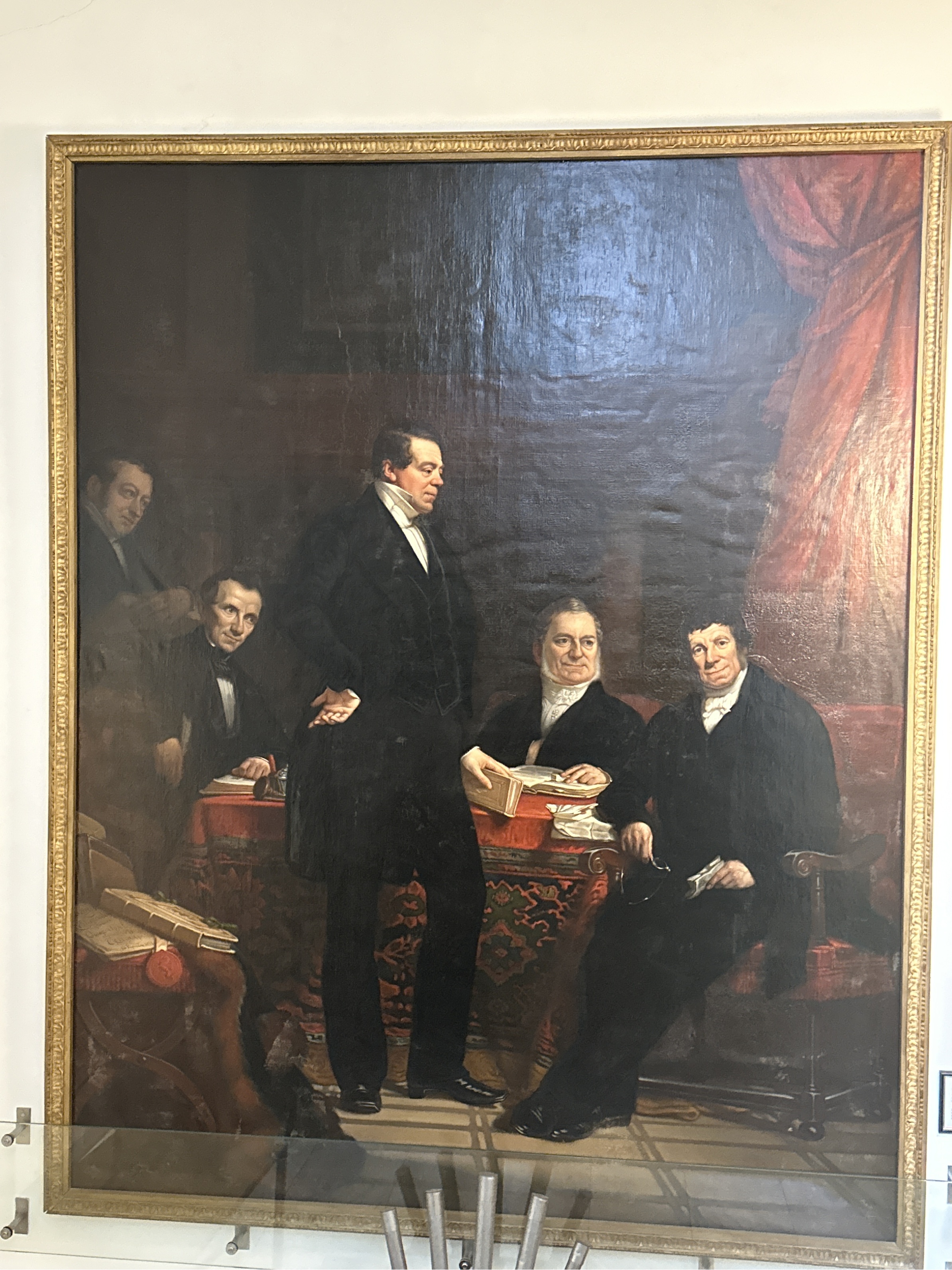
Gerrit Postma grew up in the Collegiant-Doopsgezind Orangjeappel orphanage and proved to be a talented artist: he produced many artworks that skilfully document the buildings of Amsterdam and the place where he was raised.
Location
De Oranjeappel
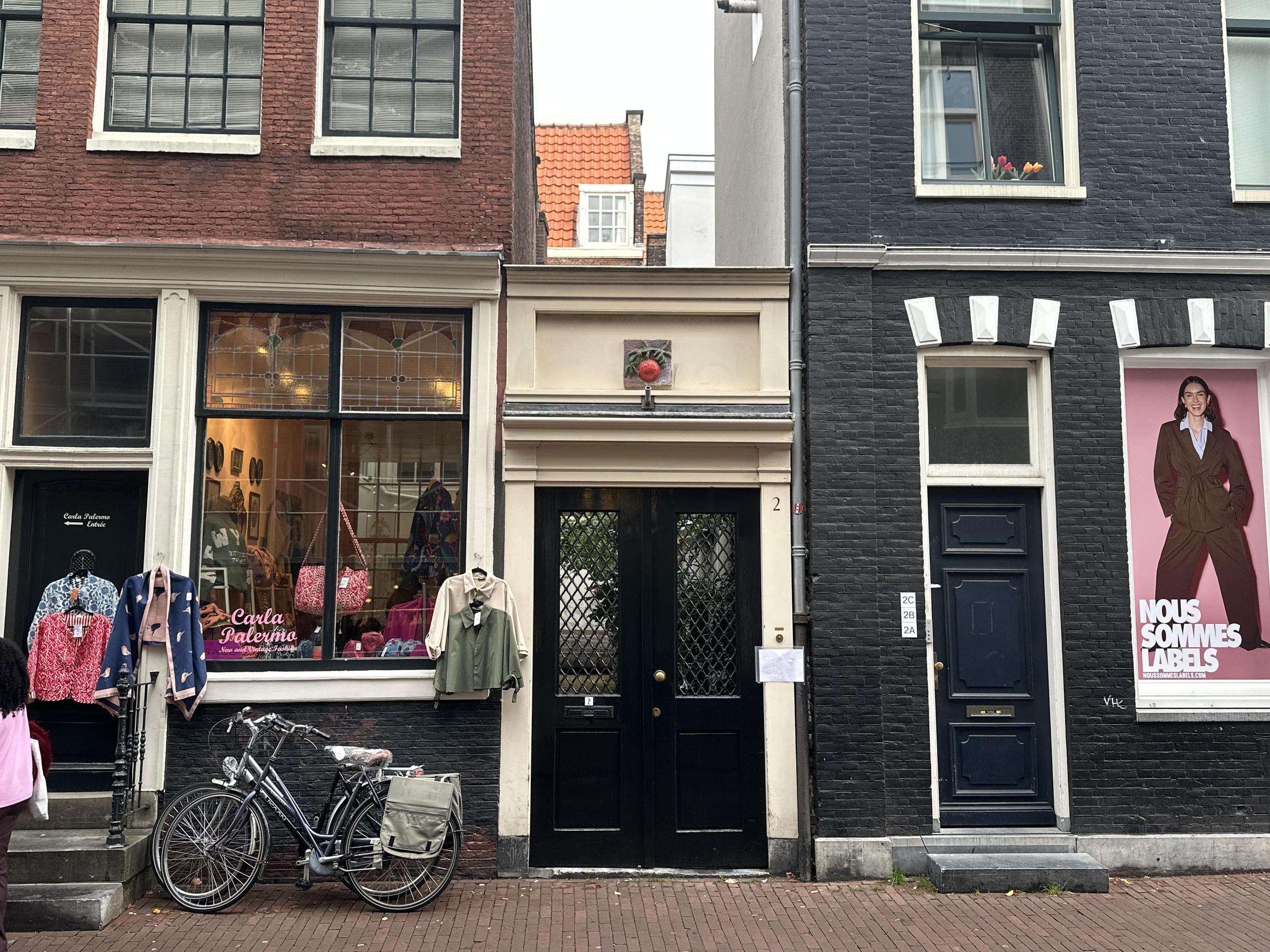
Huidenstraat 2
Type
Orphanage
Religious community
Doopsgezind Amsterdam (Mennonites)
Object
Portrait of the regents of De Oranjeappel
Maker and date
Gerrit Postma
1842
Visit
The painting is on display in the Singelkerk
Current exterior
The Orangjeappel Orphanage Through the Eyes of an Artist Who Grew Up There
This large nineteenth-century painting of the regents of the Collegiant-Doopsgezind Orangjeappel was commissioned from an artist who himself grew up as one of the orphans at this institution. Gerrit Postma (1819-1894) was born in Nes on Ameland, but after the death of his father the family moved to Amsterdam. Not long after that his mother also passed away. He grew up in the Oranjeappel from 1828-1842.
Postma demonstrated significant artistic talent. He received lessons from celebrated Dutch painter Jan Adam Kruzeman, and studied at the Koninklijke Academie voor Beeldende Kunsten. The Orangjeappel regents portrait is one example of his painted work; however, for Amsterdammers, he may be most familiar as the illustrator of various doorways and views of Amsterdam’s civic and religious buildings. Not surprisingly, he also drew the entry ways to the Orangjeappel.
Collegiants
The Collegiants began to meet in reaction to the grip of orthodoxy within Reformed tradition as of the Synod of Dordrecht in 1619. Meetings included members from many different church denominations who remained members of their own churches while they also considered themselves Collegiants; they would gather together for so-called “colleges” and share without the leadership of one clear minister or leader
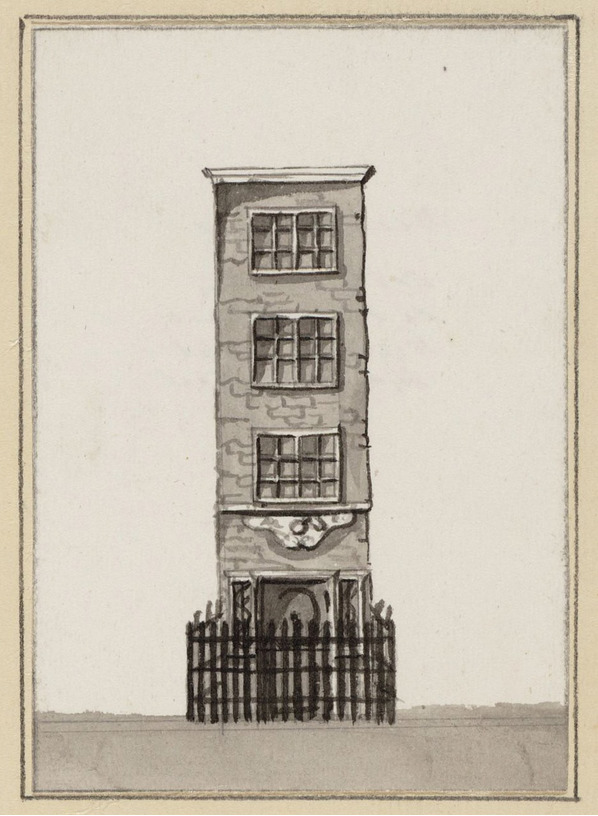
Drawing of the entry to the boys' wing of the Oranjeappel.
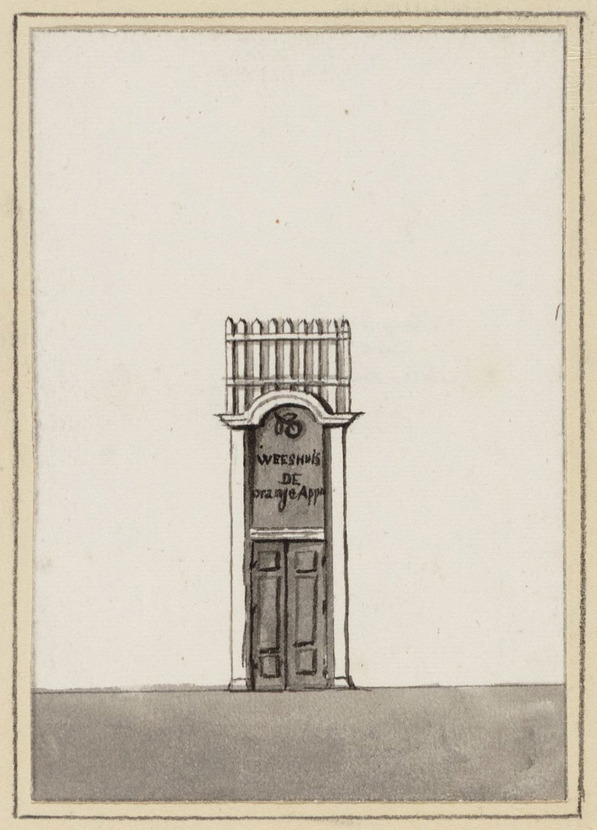
Drawing of the entry to the girls' wing of the Oranjeappel.
Located between the Keizersgracht, Herengracht, and Huidenstraat, the Orangjeappel orphanage came into fruition in 1675 when Collegiants, who were meeting at warehouse on the Keizersgracht (present-day 345-347), were concerned about orphans from their more open-minded circles who might otherwise be brought up in orphanages with inflexible theological dogmas that went against their Collegiant values. A boys orphanage was opened first, and in 1680 with the purchase of the canal house at present-day Herengracht 346, a girls orphanage was opened as well. Boys entered from the Keizersgracht while the entrance to the girl’s orphanage was at Huidenstraat 2.
From the beginning, the Collegiant orphanage had strong ties with the Lamist Mennonite church of Amsterdam (Singelkerk). All but one of the founding governors of the orphanage were Collegiant Mennonites. In 1811, the orphanage management became more explicitly tied to the Amsterdam Mennonite community: an agreement between the orphanage governors and the deacons of the Verenigde Doopsgezinde Gemeente Amsterdam (united Mennonite congregation of Amsterdam) established that all members of the board of governors were to be members of the Mennonite church from that point on. This allowed for the closure of the other Mennonite orphanage on the Prinsengracht that remained open in Amsterdam at that time (formerly Prinsengracht 1011-1017, also a site illustrated by Postma). The remaining 17 orphans were transferred over to the Oranjeappel.
The Oranjeappel location between the Herengracht and Keizersgracht was used until 1920. After that, it was moved to the De Lairessestraat 11, and then, in 1930, to Hilversum where it eventually closed. One Oranjeappel gable stone - an orange on a leafy branch - was eventually moved onto the Singelkerk premises and now rests above the door of the church board room right beside Postma’s Oranjeappel regents portrait. An Oranjeappel gablestone is also still visible above a gateway at Huidenstrasat 2 even though the orphanage premises that used to be there are no longer extant.
Lammerenkrijgh [War of the Lambs]
A conflict regarding confessions of faith led to a schism in the Kerk bij’t Lam in 1664. The minister and Collegiant thinker Galenus Abrahamsz. de Haan, and his followers, believed that confessions of faith should be seen as guiding documents that evolve with congregational life. Samuel Apostool, and his followers, felt these were binding documents. Followers of Galenus remained in place, while followers of Apostool left and established a new hidden church called the Zon at warehouse down the street. Most Mennonite groups around the Republic followed suit in affiliating with either the Lamists or Zonists.
Doopsgezind Amsterdam (formerly VDGA)
Amsterdam’s Mennonite congregation is known today as Doopsgezind Amsterdam. After centuries of divisions and schisms among the Mennonites, during which time the more conservative groups tended to prefer the name Mennoniet [Mennonite] while the more progressive groups went by Doopsgezind [“Baptism community” or “Baptism-minded”], the congregations united in 1801 as the Verenigde Doopsgezinde Gemeente van Amsterdam (VDGA) [United Mennonite Congregation of Amsterdam]. Today, Doopsgezind Amsterdam is comprised of the Singelkerk (at the 17th-century Kerk bij ’t Lam location) and the 19th-century Meerpadkerk in Noord.
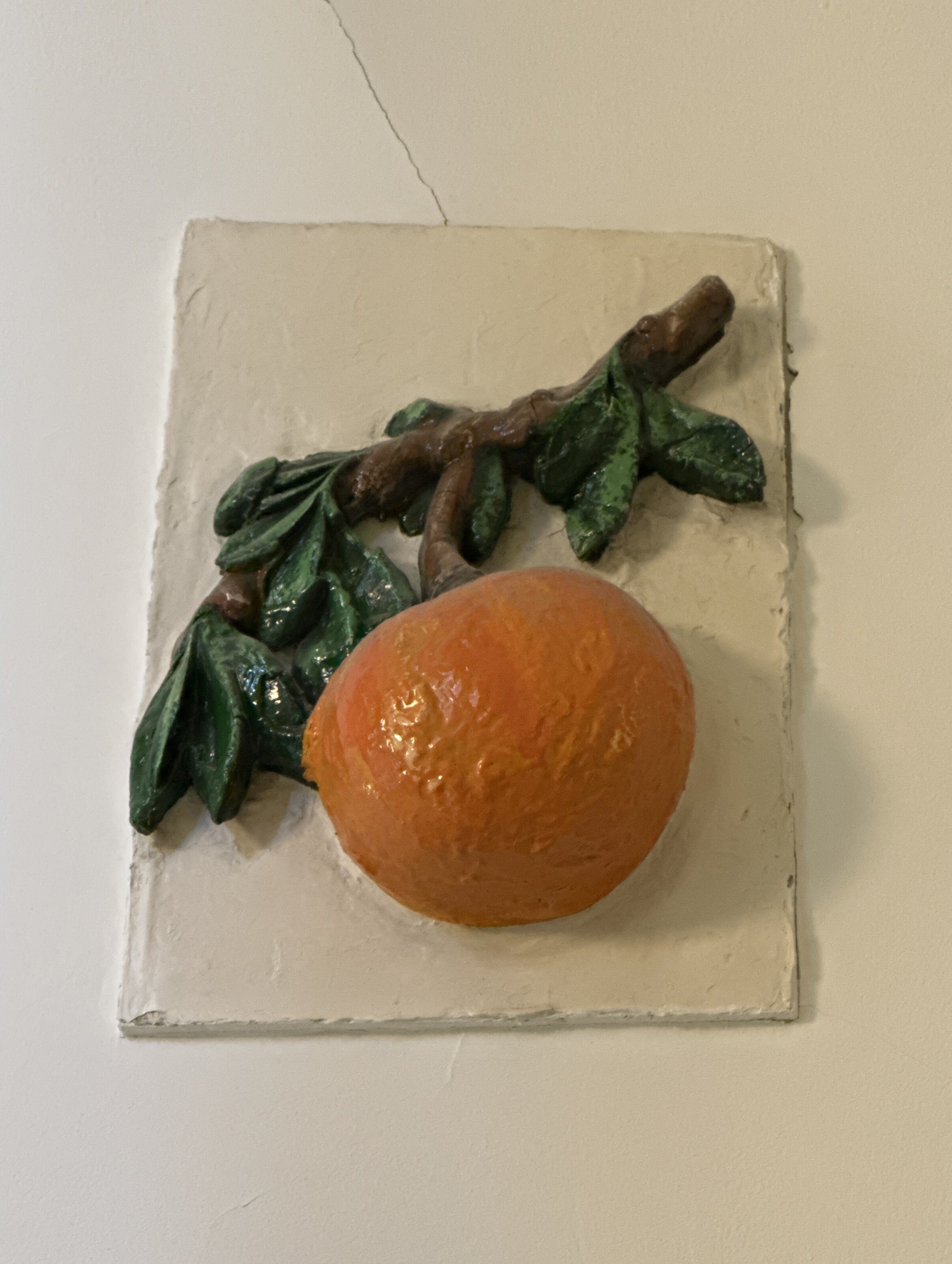
One of the gable stones from the Oranjeappel, which is now visible inside the Singelkerk.
Nina Schroeder-van 't Schip
Art Historian & Mennonite Heritage Specialist Doopsgezind Amsterdam
Last edited
October 27, 2025
Regents of the Orangjeappel, Orphanage director (‘weesvader’) Blaeuwpot, and regents Simon Cool, Abraham Salm Jacobsz., Jacob Lugt, and Jacob Slagregen, Gerrit Postma, ca. 1842, oil on canvas. Collection of Doopsgezind Amsterdam.
Exterior: photography Our Lord in the Attic Museum
Drawings of the entry ways to the Oranjeappel boy’s wing, formerly at Keizersgracht 345, Gerrit Postma, ca. 1830-1840, pen and ink wash. Collectie van Eeghen: Drawings, Stadsarchief Amsterdam.
Drawings of the entry ways to the Oranjeappel girls wing, formerly at the Huidenstraat 2, Gerrit Postma, ca. 1830-1840, pen and ink wash. Collectie van Eeghen: Drawings, Stadsarchief Amsterdam.
One of the gable stones from the Oranjeappel, now visible inside the Singelkerk. Collection of Doopsgezind Amsterdam.
Bakker, B. et al., De verzameling Van Eeghen: Amsterdamse tekeningen (1600-1950) (Zwolle 1988) 475-476, 416.
Fix, Andrew C., Prophecy and Reason: The Dutch Collegiants in the Early Englightenment (New Jersey 1991).
Groenveld, S., (ed.), Daar de Orangie-appel in de gevel staat: In en om het weeshuis der doopsgezinde collegianten, 1675-1975, (Amsterdam 1975).
Slee, J.C. van, De Rijnsburger Collegianten (Utrecht 1980).
Jong, Wietskenel de en Johan Pennings, Het dopers wandel-boek : Twee wandelingen door Amsterdam (Amsterdam 2011) 15-16, 33-34.