

 Christianity Protestant
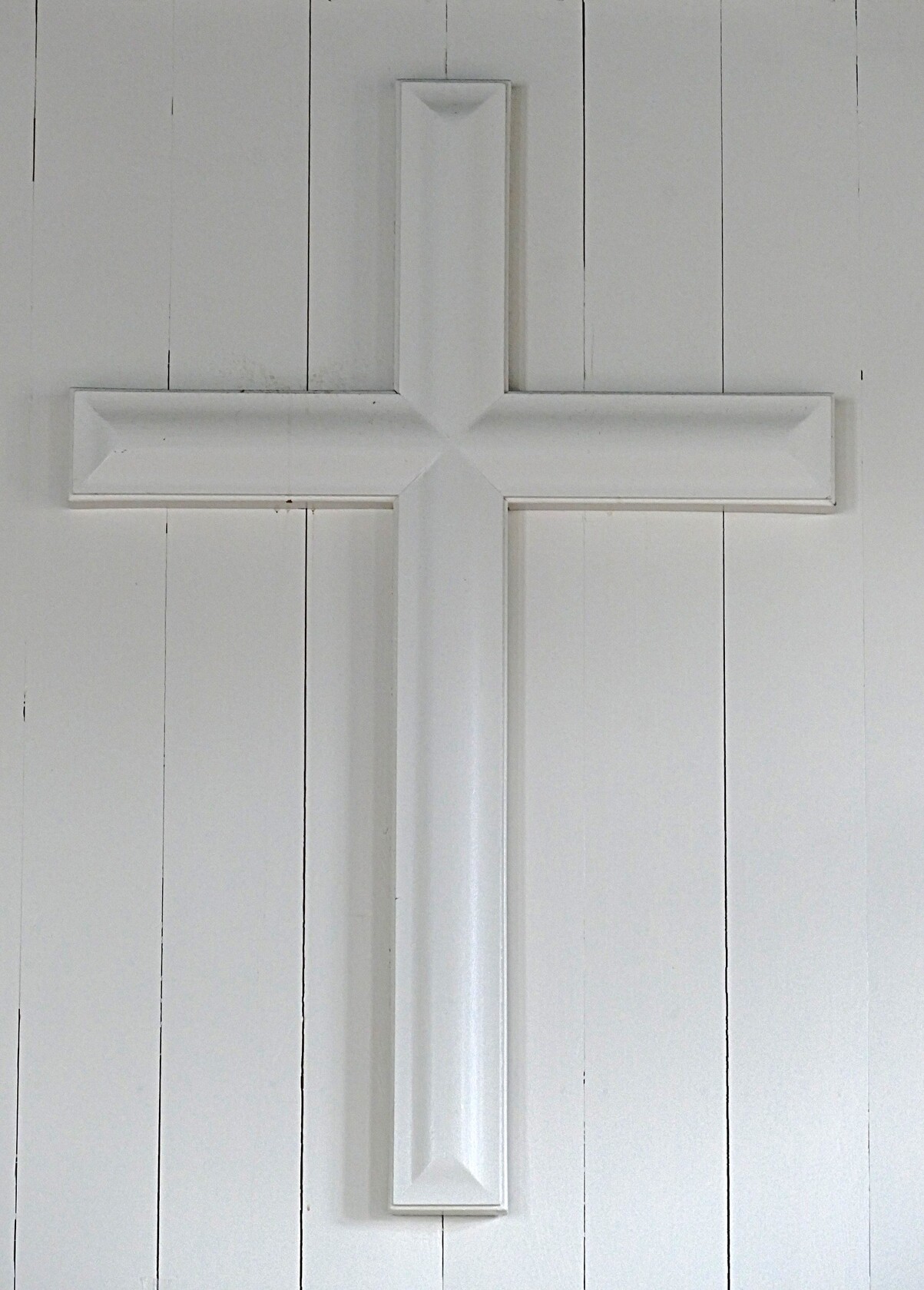
Behind the pulpit of Amsterdam’s smallest church hangs a wooden cross—one of only a few of its kind in Dutch Mennonite worship spaces.
Location
Meerpadkerk
Meerpad 9
Type
Church
Religious community
Mennonite Church
Object
White painted cross
Maker and date
Maker unknown
1947
Visit
The cross can be seen in the church
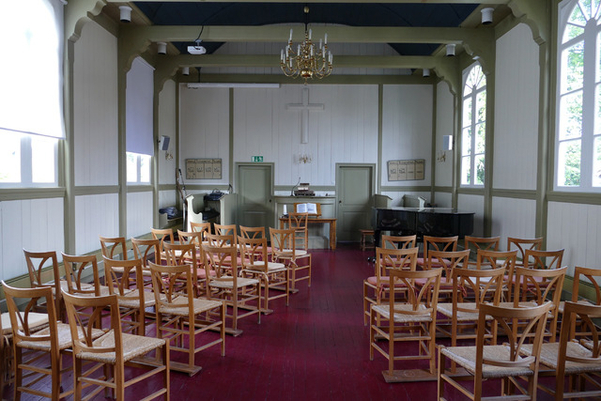
Current interior
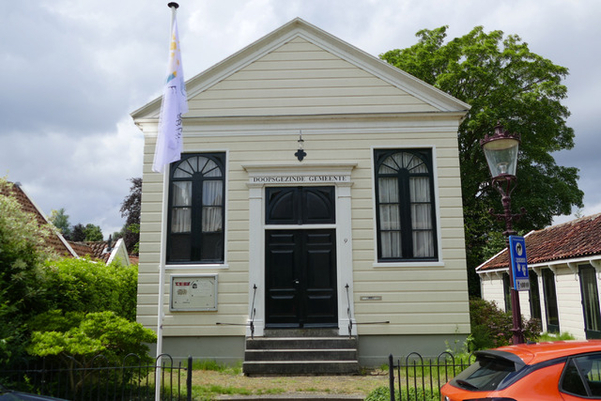
Current exterior
The Cross in Amsterdam’s Smallest Church
In 1946, the Mennonite minister Willem Frederik Golterman (1898-1990) was preparing to leave his job as minister with the Mennonite congregation of Amsterdam for a position as professor with the Doopsgezind Seminarium [Dutch Mennonite Seminary]. The congregation wished to offer him a gift, and he requested that a cross be installed behind the pulpit. A white, wooden cross was put up in the Meerpadkerk in 1947.
This little wooden church was built in 1843. Three Mennonites living in the area had petitioned the congregation of Amsterdam regarding the need for an additional church: for residents of the isolated villages of Buiksloot and Nieuwendam, the walk and boat journey to cross the IJ to get to Amsterdam was too difficult and time consuming. The Amsterdam congregation agreed to make a yearly donation to support a new church; however, the Mennonites there would have to raise their own funds to build the worship place. Many contributed, and the funds were raised. The church was modelled after the Mennonite church in Knollendam, and originally the pulpit and the benches along the walls (at the time, for the seating of the men) were purchased from the Oude Huys (the church of the Frisian Mennonites) in Zaandam-Westzijde.
Over the years, there were many moments when the future of the church seemed to be threatened, whether due to building renovation costs or shrinking attendance. The Waterland flood of 1916 left the church and entire street a meter and half under water, requiring significant repairs. By the 1960s, the building was again in need of major renovation. This investment was made, and the church was even expanded by “one window length.” The Meerpadkerk, which has services twice a month, is still considered the smallest church building in Amsterdam.
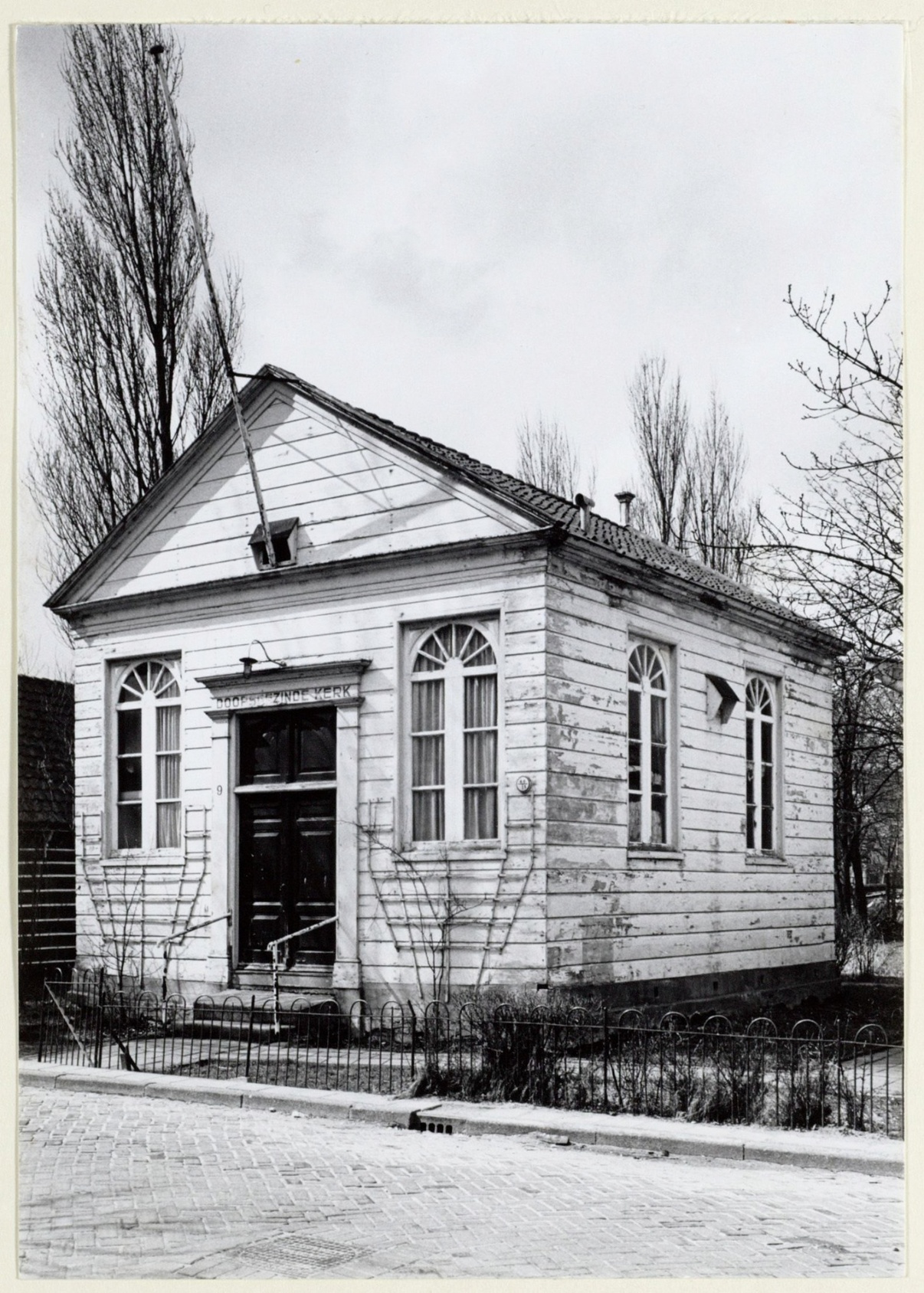
The Meerpadkerk in 1969 before major renovations in 1970-71.
There continues to be some debate among regular attendees about the placement of the cross in the church space there. Crosses are not typical in Dutch Mennonite churches, though there are a handful that do have them. Mennonite churches have indeed traditionally been plain and without ornamentation, symbols, or artworks in their interiors – though today there is some flexibility on this. This cross is, in any case, taken up as one of the visual components in a quilt commemorating the 150th anniversary of the church. The other elements in the quilt are the lamb and sun (the logo of Amsterdam’s Mennonite congregation), an open bible on the lectern, linked chains that refer to the former Meerpadkerk newsletter called De Schakel [The Link], and Menno Simons’s “Fundament text” (For no one can lay any foundation other than the one already laid, which is Jesus Christ. 1 Corinthians 3:11, NIV).
Menno Simons
The term “Mennonite” comes from the name of Menno Simons (1496-1561), a Frisian Priest who converted to Anabaptism in the 1530s, and emerged as one of several important early leaders of the movement after the fall of certain revolutionary and apocalyptically-oriented branches of Anabaptists. Later, a group that split away from those known as Mennonites in the 1550s chose instead to be called Doopsgezinden (“baptism-community” or “baptism-minded”). In the Dutch Republic times, the name Doopsgezind was often the name preferred by Mennonite groups who were more progressive in their theology or lifestyle.
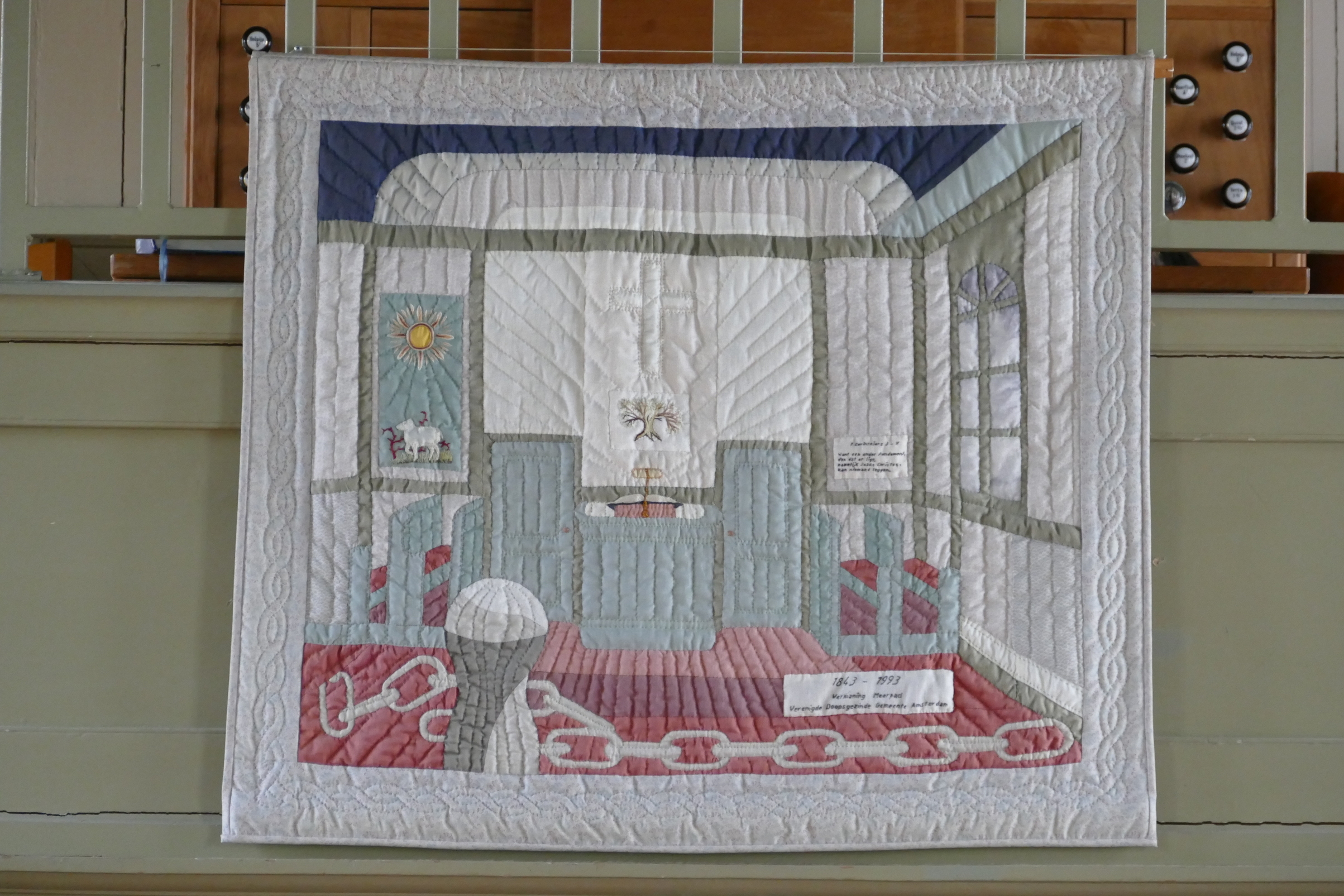
Quilt commemorating the 150th anniversary of the Meerpadkerk. The quilt currently hangs on the back balcony of the church.
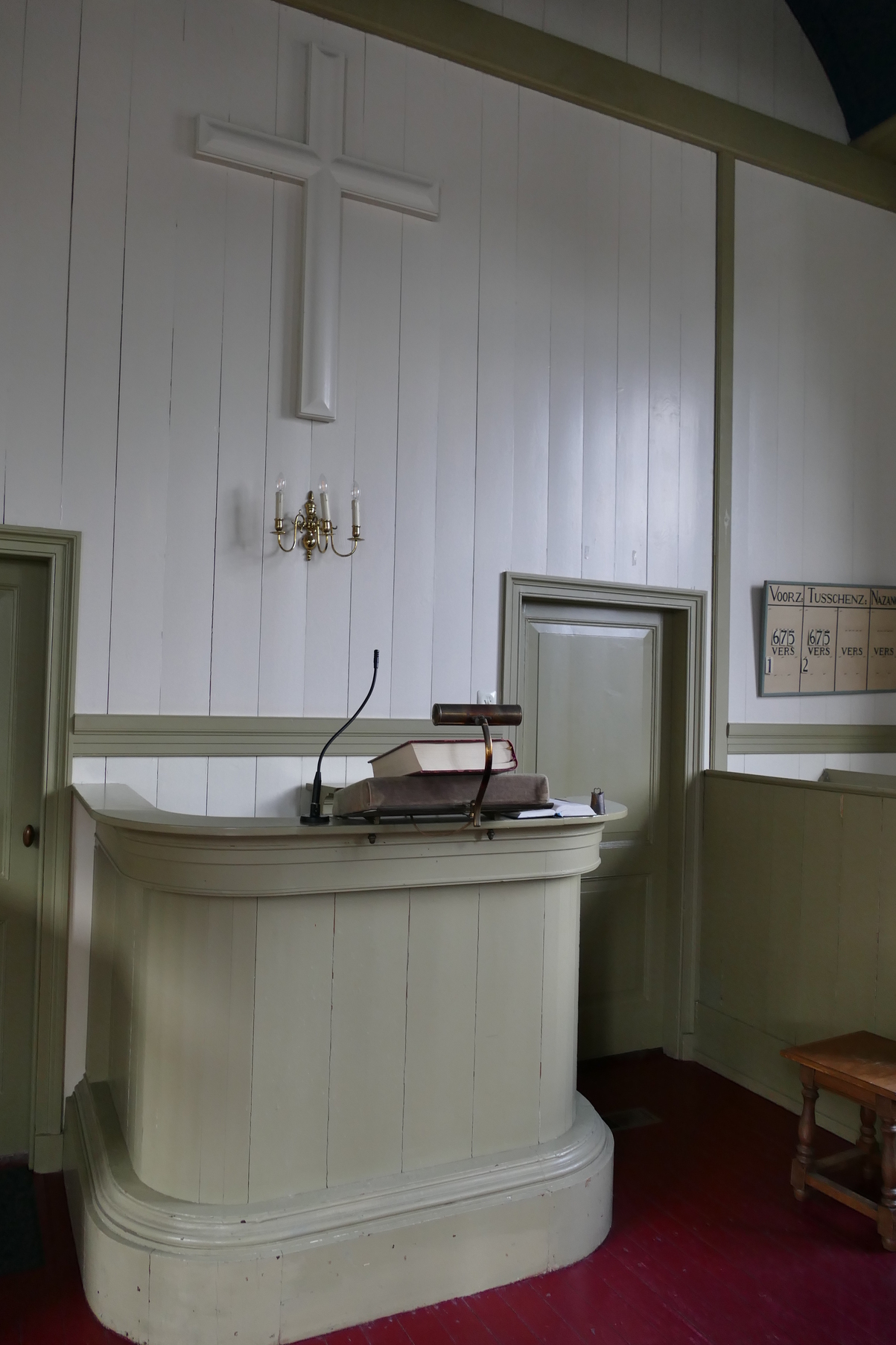
The cross hanging behind the pulpit of the Meerpadkerk.
Nina Schroeder-van 't Schip
Art Historian & Mennonite Heritage Specialist Doopsgezind Amsterdam
Last edited
April 21, 2026
Wooden Cross, unknown maker, 1947, painted wood. Collection of Doopsgezind Amsterdam. Photo Doopsgezind Amsterdam.
Interior & exterior: photography Doopsgezind Amsterdam.
Meerpad 9. Doopsgezinde Kerk in Nieuwendam (gebouwd in 1843), photograph, 16 April 1969. Collection G.L.W. Oppenheim, Amsterdam City Archives. Photo G.L.W. Oppenheim.
Quilt commemorating the 150th anniversary of the Meerpadkerk, unknown maker, 1993. Photo Doopsgezind Amsterdam.
Wooden Cross Behind the Pulpit of the Meerpadkerk, unknown maker, 1947, painted wood. Collection Doopsgezind Amsterdam. Photo Doopsgezind Amsterdam.
Themanummer “Meerpad 175 jaar” in: idA in dit Amsterdam maandblad van Doopsgezind Amsterdam, 57 (2018) 8.
Welcker, J.M., De Vermaning aan het Meerpad: Geschiedenis van de Doopsgezinden in Nieuwendam 1843-1993 (Schoorl: Uitgeverij Pirola, 1993).
Online sources
Website Doopsgezind Amsterdam, “Historie Meerpadkerk”
Last visited 16-04-2026
Hoekema, A.G., “Golerman, Willem Frederik” Biografisch lexicon voor de geschiedenis van het Nederlands protestantisme vol. 5 (Kampen: Kok, 2001) 208-209. Website Huygens Institute.
Last visited 16-04-2026
Hofman, R. "Golterman, Willem Frederik (1898-1990)." Global Anabaptist Mennonite Encyclopedia Online. 1987.
Last visited 16-04-2026
Zijpp, Nanne van der. "Nieuwendam (Amsterdam, Noord-Holland, Netherlands)." Global Anabaptist Mennonite Encyclopedia Online. 1957.
Last visited 16-04-2026