

 Christianity Protestant
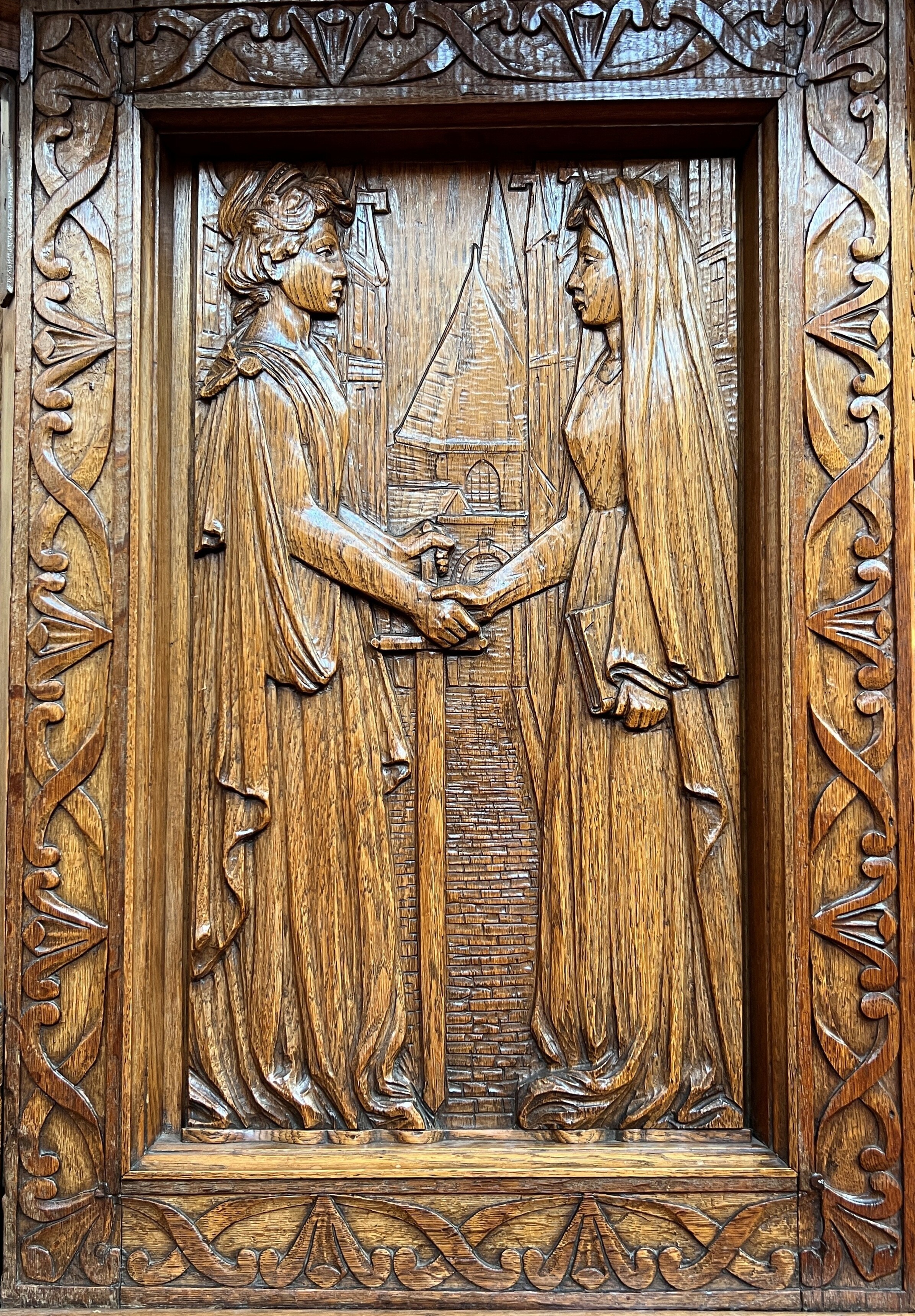
Mondriaan is famous for his abstract art featuring squares in primary colours – but did you know that he also designed the images carved on the late nineteenth-century pulpit at the English Reformed Church?
Location
English Reformed Church
Begijnhof 48
Type
Church
Religious community
Presbyterianism & PKN
Object
Carved wooden relief on a pulpit
Maker and date
Mondriaan
1898
Visit
The pulpit can be viewed during Sunday services and opening hours
Current exterior
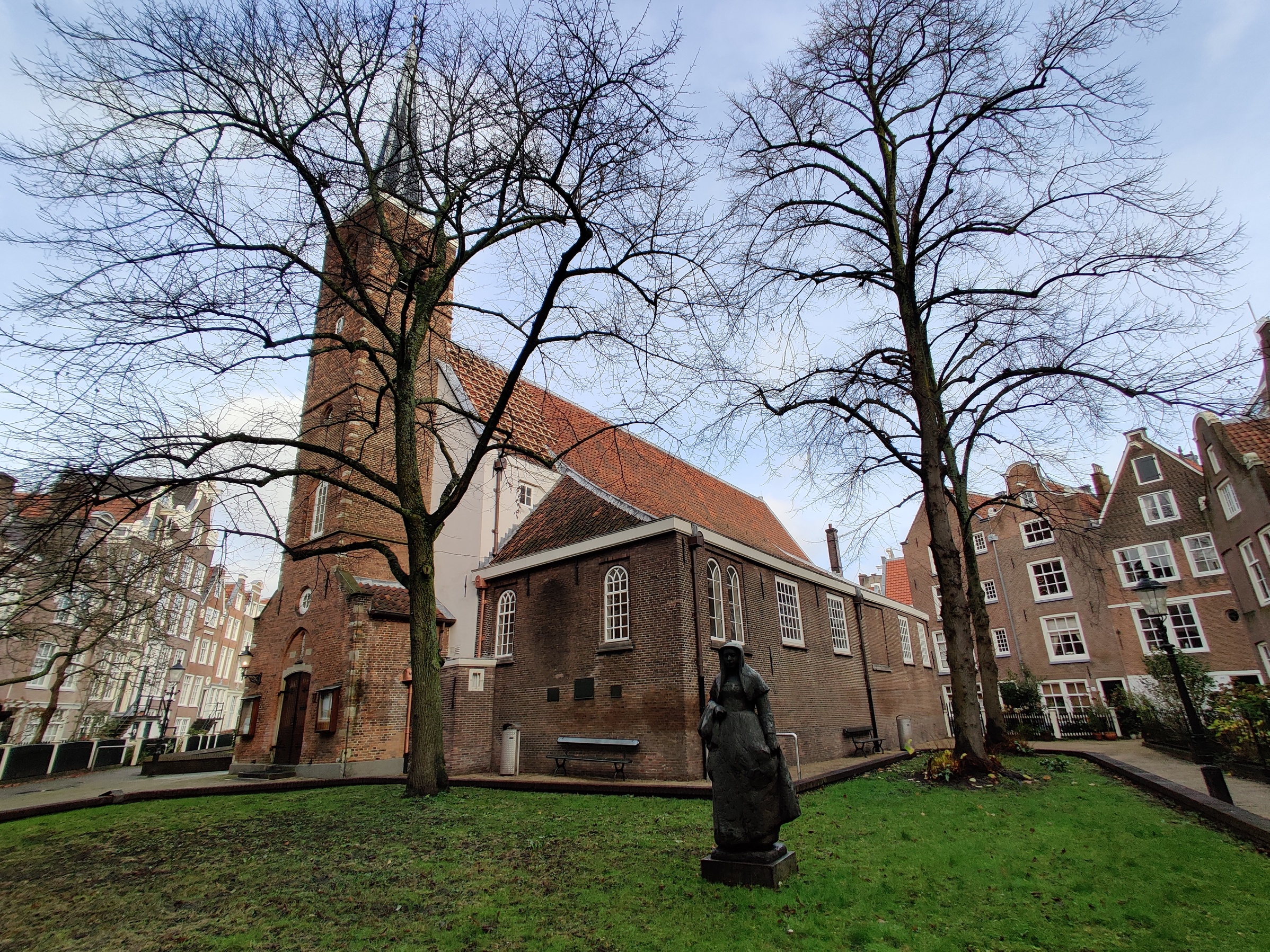
The English Reformed Church and its Pulpits: The Alteration, William and Mary...and Mondriaan
After the alteration to Protestantism in 1598, the former-Catholic church in the Begijnhof went out of use for almost two decades: it was temporarily repurposed as a storage space until Amsterdam’s civic authorities decided to grant a petition for an English-language Reformed place of worship in the city. Reverend John Paget – the first of many English and Scottish Reformed ministers who were to follow – preached an opening sermon at the church on 5 February 1607.
The interior of the church was renovated to suit Reformed beliefs and practices. In order to deemphasize the former location of the Catholic high altar (which had been at the East end of the nave) and instead highlight the Bible and spoken word of the minister, the orientation of the church was changed and the pulpit was placed along the middle of the long wall on the Northern side of the building. You can still see that the plaster around the two windows on either side of the spot where the pulpit would have been is slanted in such a way that natural light shines sideways onto this spot inside the church. On the opposite Southern wall, you can also see an ornate wooden bench called the Burgomaster’s Pew, where important civic officials were welcome to sit and enjoy a good view of the service. The church remained in this orientation until 1912.
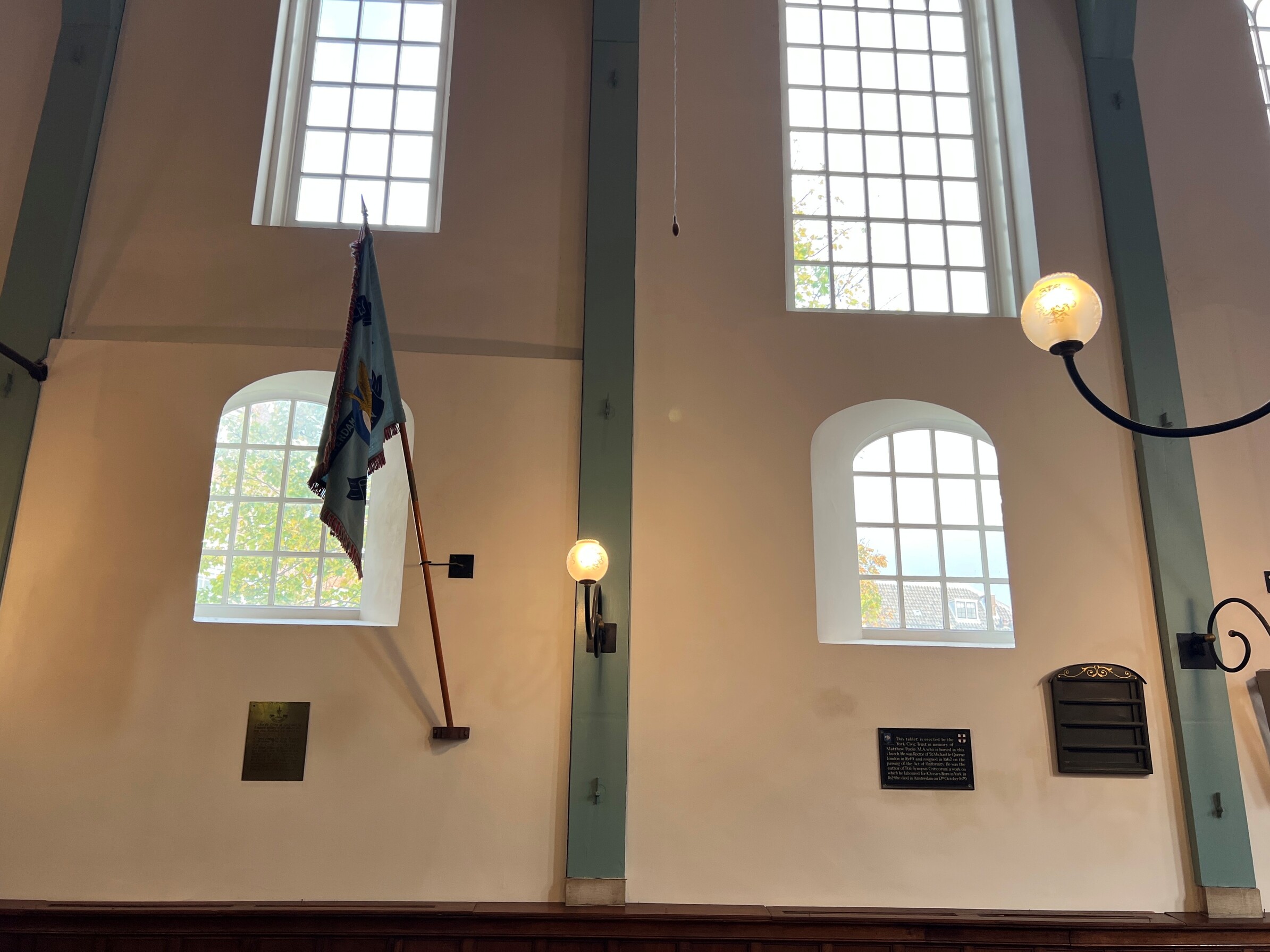
Slanted plaster allow more natural light to fall on the northern wall. From the Alteratie until 1912, this was the location of the pulpit.
While the pulpit from this early Reformed period is no longer in use, the church does still use the beautiful brass lectern from 1689, which was a gift from Stadholder William III of Orange and Mary Stuart on the occasion of their accession to the throne of Great Britain. This early modern treasure now rests upon a much more recently designed wooden pulpit, which features panels with designs by the artist Piet Mondriaan (who is best known for his later abstract art featuring colourful squares). The designs are carved in relief by Edema van der Tuuk. This newer pulpit was made to commemorate another royal occasion; namely, Dutch Queen Wilhelmina’s ascension to the throne in 1898. From left to right, the panels represent Church and State (including a view on the entry to the Begijnhof), the Church as teacher, an angel blessing the coat of arms of the Netherlands, and the Church as benefactress.
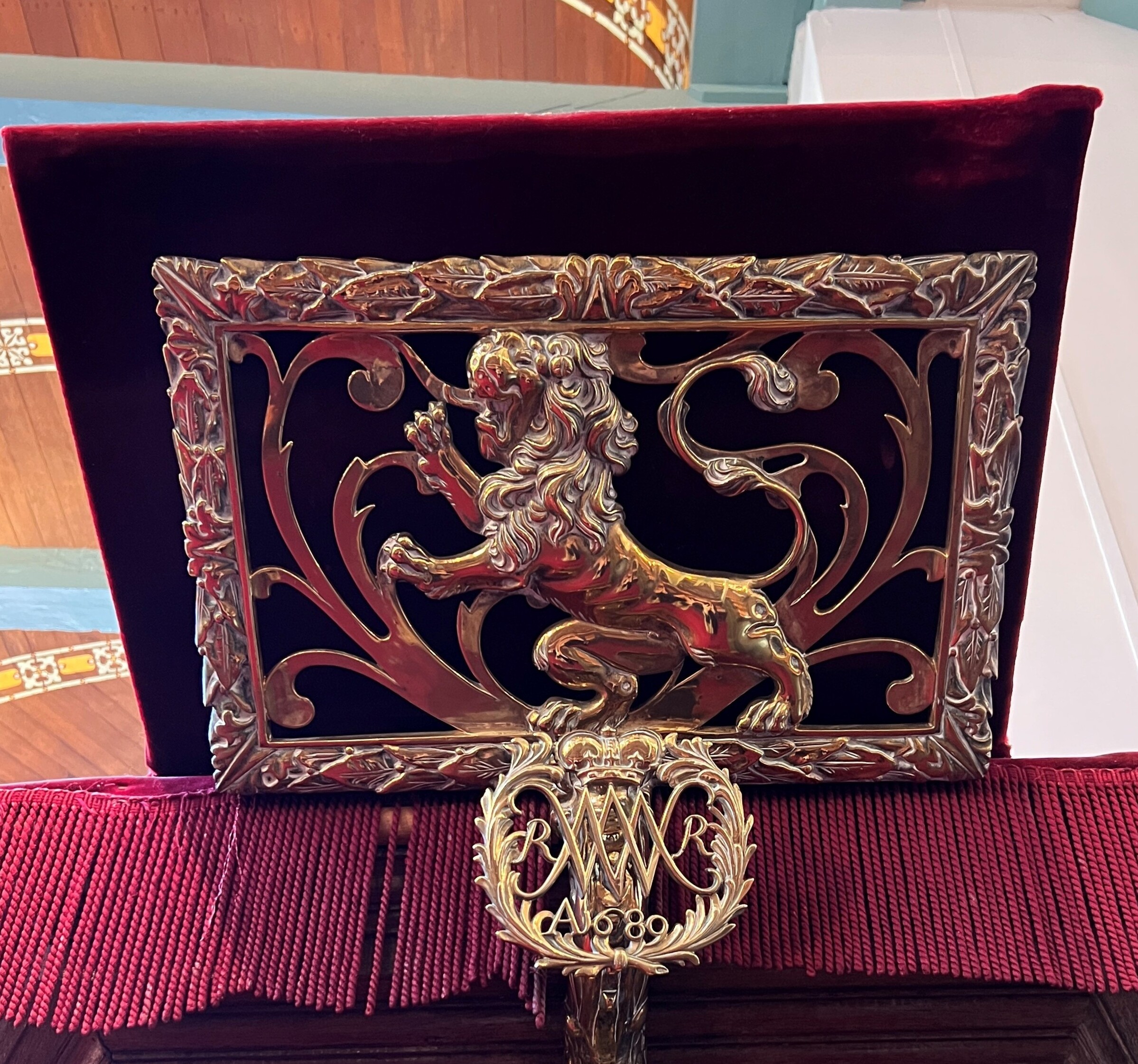
Brass lectern from 1689, a gift from Stadholder William III and Mary Stuart.
Today, the church is lined with pews and chairs which are once again reoriented toward the chancel on the East. The pulpit remains a focal point. The English Reformed Church is affiliated with the Presbyterian Church (Church of Scottland) and with the PKN (Protestant Church in the Netherlands).
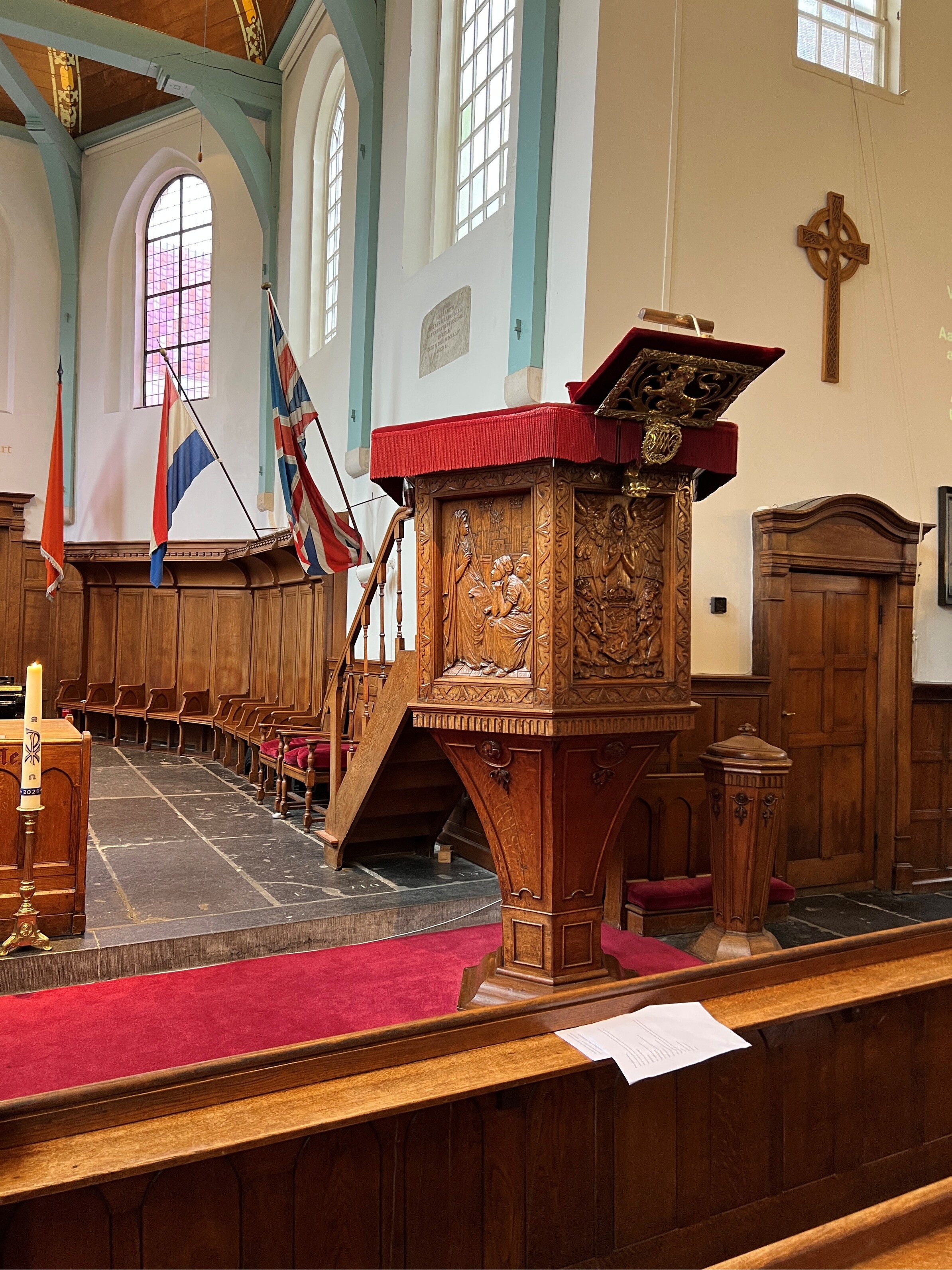
Due to the current location of the pulpit the original orientation of the church is restored.
Nina Schroeder-van 't Schip
Art Historian & Mennonite Heritage Specialist Doopsgezind Amsterdam
Last edited
November 04, 2025
Relief carvings in a wooden pulpit, designed by Piet Mondriaan and carved by Edema van der Tuuk, 1898. Collection of the English Reformed Church, Amsterdam. Photography Nina Schroeder-van 't Schip.
Exterior: photography English Reformed Church Amsterdam.
Slanted windows in the English Reformed Church. Photography Nina Schroeder-van 't Schip.
Lectern, unknown maker, 1689, brass. Collection of the English Reformed Church, Amsterdam. Photography Nina Schroeder-van 't Schip.
Pulpit in the English Reformed Church. Collection of the English Reformed Church, Amsterdam. Photography Nina Schroeder-van 't Schip.
Hildering, C., The English Reformed Church: Begijnhof Amsterdam (Amsterdam: Consistory of the English Reformed Church/ typeset and printed Roermond: Offsetdrukkerij).
Online sources
Website English Reformed Church
Last visited 10-08-2026