

 Christianity Protestant
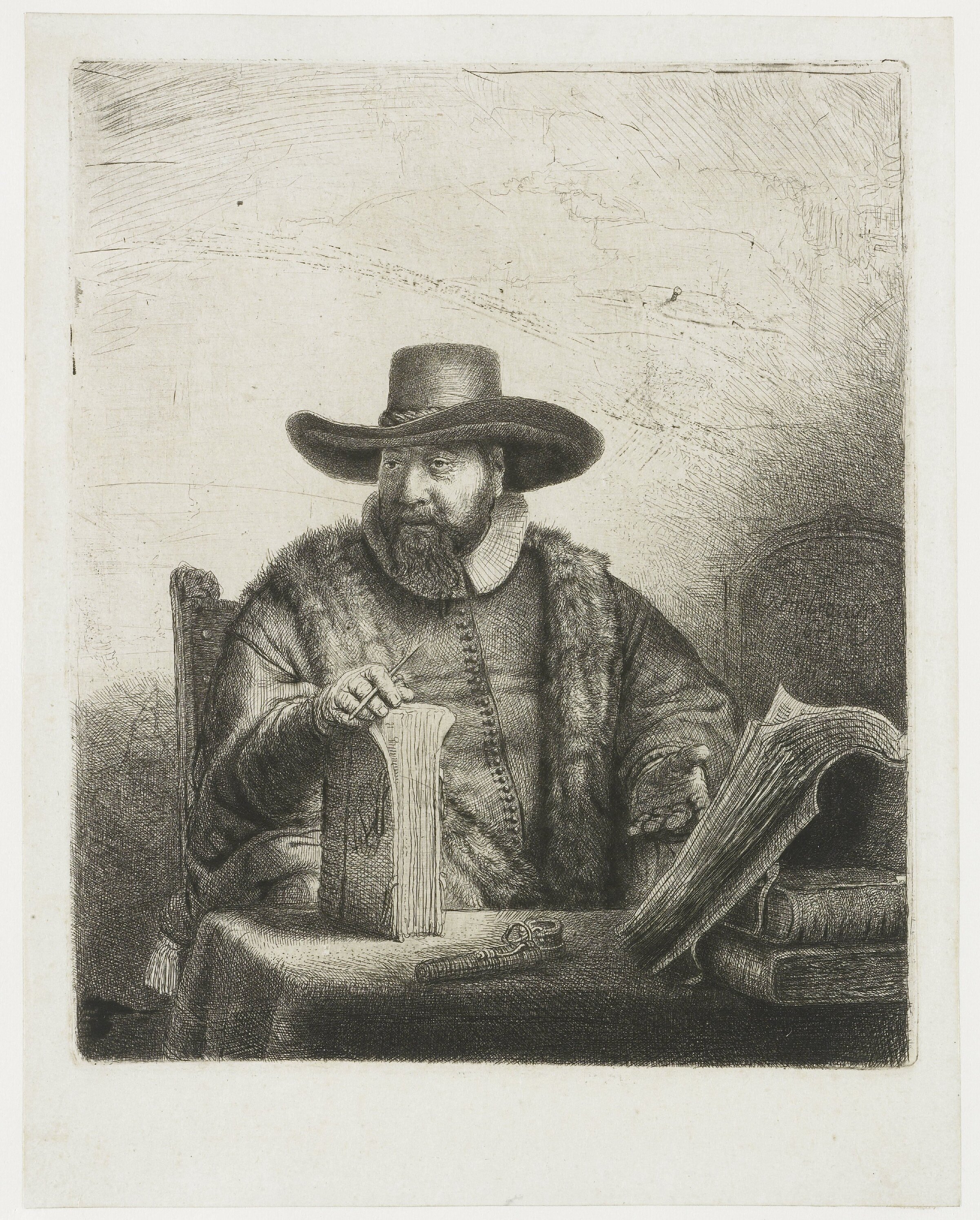
Vondel writes: “Ay, Rembrandt, paint Cornelis voice. The visible part is the least of him;” in reference to this portrait of a Waterlander preacher whom he knew personally.
Location
Kerk bij de Toren
Singel 158
Type
Hidden church
Religious community
Mennonite Church
Object
The Mennonite preacher Cornelis Claesz. Anslo
Maker and date
Rembrandt van Rijn
1641
Visit
The print is not on display
Current exterior

“Ay Rembrandt, paint Cornelis’s Voice”: The Waterlander Mennonites at the Church by the Tower
The Waterlanders had been present in Amsterdam since the sixteenth century. For a time, they gathered at a warehouse on present-day Spuistraat 50 known as the Kleine Spijker (meaning Little Warehouse – though spijker was also a word for nail). In 1604, they moved to a larger building behind the housefronts at present-day Singel 158.
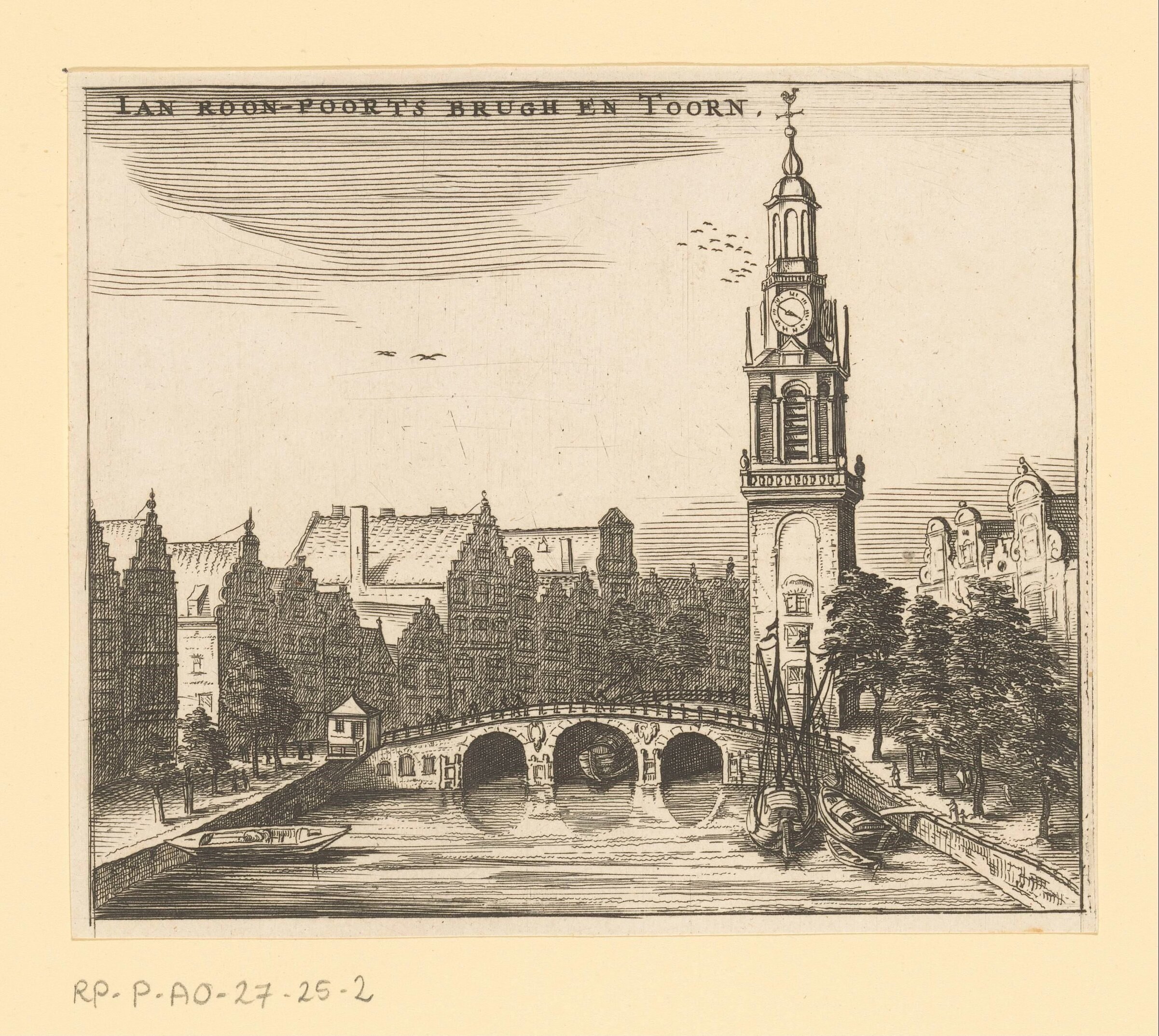
View of the Jan Roodenpoortstoren, 1664.
Their worship place was called the Kerk bij de Toren [Church by the Tower] for its location next to the Jan Rodenpoortstoren. This hidden church, with its typical sober Mennonite interior, was also nicknamed the Grote [Big] Spijker.
hidden church
Building in which hidden religious services were held in the Dutch Republic (1588-1795). Christian denominations outside the Calvinist church, such as Catholics, Lutherans, Mennonites and Remonstrants, had to practice their religions in hidden churches.
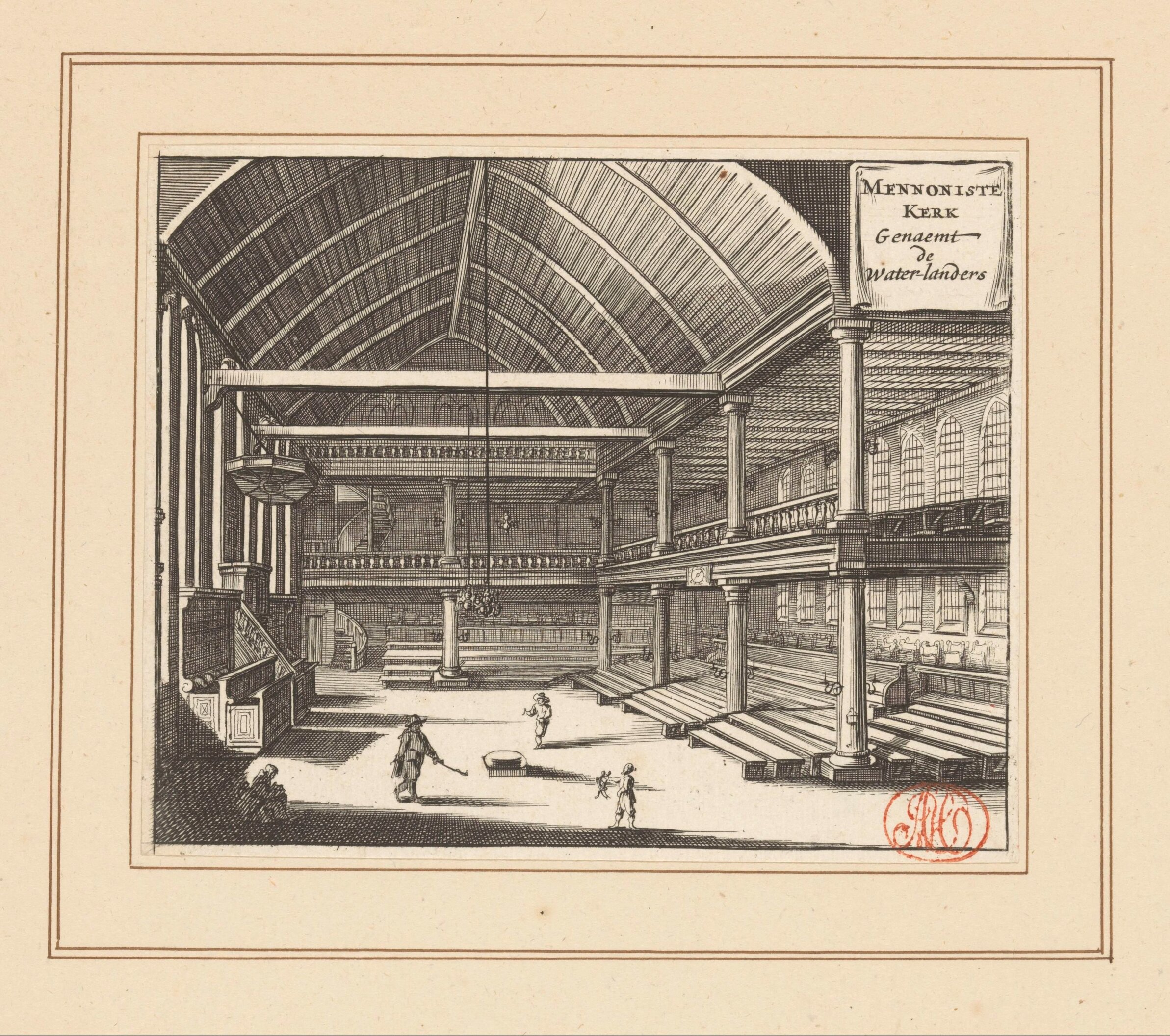
Etching of the interior of the Waterlander Mennonite Kerk bij de Toren [Church by the Tower], 1664.
The congregation that met at the Toren, like other Mennonite congregations in Amsterdam, counted a variety of notable artists, publishers, and poets amongst its congregants - including the esteemed poet and playwright Joost van den Vondel, who was a member and deacon there for several years before his conversion to Catholicism in later life, and the artist and art dealer Hendrick van Uylenburgh, who was Rembrandt’s art dealer in the 1630s.
Rembrandt, who enjoyed a diverse patron base from many different faith groups in Amsterdam, painted several portraits of church members from this congregation. In 1641, he painted the minister Cornelis Claesz. Anslo and his wife Aeltje Schouten posed in a moment of devotional reflection (Gemäldegalerie, Berlin).
Rembrandt also made a portrait print of Anslo posed as a scholar in his study, a favoured format for portraits of theologians and ministers. In one state of the print, there is a nail in the wall at the back right-hand side which has raised some speculation among scholars: could this “grote spijker” be a playful pun on the nickname used for Anslo’s congregation? Anslo is shown gesturing with his lips parted – a “speaking likeness” that emphasizes the importance of thoughtful speech in his role as a preacher. The print circulated with various appended laudatory poems. One, penned by Vondel, highlights the importance of hearing Anslo’s words to fully “see” him:
Ay, Rembrandt, paint Cornelis voice.
The visible part is the least of him;
The invisible is known only through the ears.
The one who wishes to see Anslo must hear him.
In 1668, the Toren merged with the Kerk bij’t Lam, thereafter holding services in both buildings. In 1812, the Toren was closed. At the Torensluis bridge today, there is no trace of either the Jan Roodenpoortstoren or the hidden church. Both have been demolished. There is, however, a large bronze statue of Multatuli (pen name for Eduard Douwes Dekker, himself the son of a Mennonite minister), who is famous for his social protest novel, Max Havelaar, about Dutch colonial exploits in Indonesia.
Nina Schroeder-van 't Schip
Art Historian & Mennonite Heritage Specialist Doopsgezind Amsterdam
Last edited
December 16, 2025
Portrait of the Preacher Cornelis Claesz. Anslo, Rembrandt van Rijn, 1641, etching and drypoint engraving, 18,6 x 15,7 cm. Collection of Rijksmuseum Amsterdam. RP-P-1961-1148.
Exterior: photography Our Lord in the Attic Museum.
View of the Jan Roodenpoortstoren, Attributed to Jan Veenhuysen, 1664, etching, 11,7 × 13,8 cm. Collection of Rijksmuseum Amsterdam. RP-P-AO-27-25-2.
Interior of the Waterlander Mennonite Kerk bij de Toren [Church by the Tower], Attributed to Jan Veenhuysen, 1664, etching, 11,4 x 14,1 cm. Collection of Rijksmuseum Amsterdam. RP-P-AO-24-14-1.
Dickey, Stephanie S, Rembrandt: Portraits in Print (Amsterdam: John Benjamins Publishing Company, 2004) 30-65.
Fockens, Melchior. Beschrijvingh Der wijdt-vermaarde Koop-stadt Amstelredam (…). 3de druk (Amsterdam: Marcus Willemsz. Doornick 1664).
Lambour, Ruud, “Doopsgezinde gemeenten te Amsterdam in de zeventiende en achttiende eeuw,” in: Amstelodamum 100-1 (2013), 25-38.
Van Eeghen, I.H., “De restauratie van het voormalige Anslohofje,” in: Amstelodamum 56 (1969) 199-205.
Spies, M. “Vondels dichtwerken uit zijn doopsgezinde periode,“ in: Doopsgezind bijdragen 15 (1989) 97-114.
Online sources
Rijksmuseum: De predikant Cornelis Claesz. Anslo
Last visited 12-11-2025