

 Christianity Protestant
The world’s oldest Anabaptist seminary was also the first seminary in the Netherlands to admit women: Anne Zernike graduated in 1911.
Location
Doopsgezind Seminarium
Singel 452-454
Type
Onderwijsinstituut
Religious community
Mennonite Church
Object
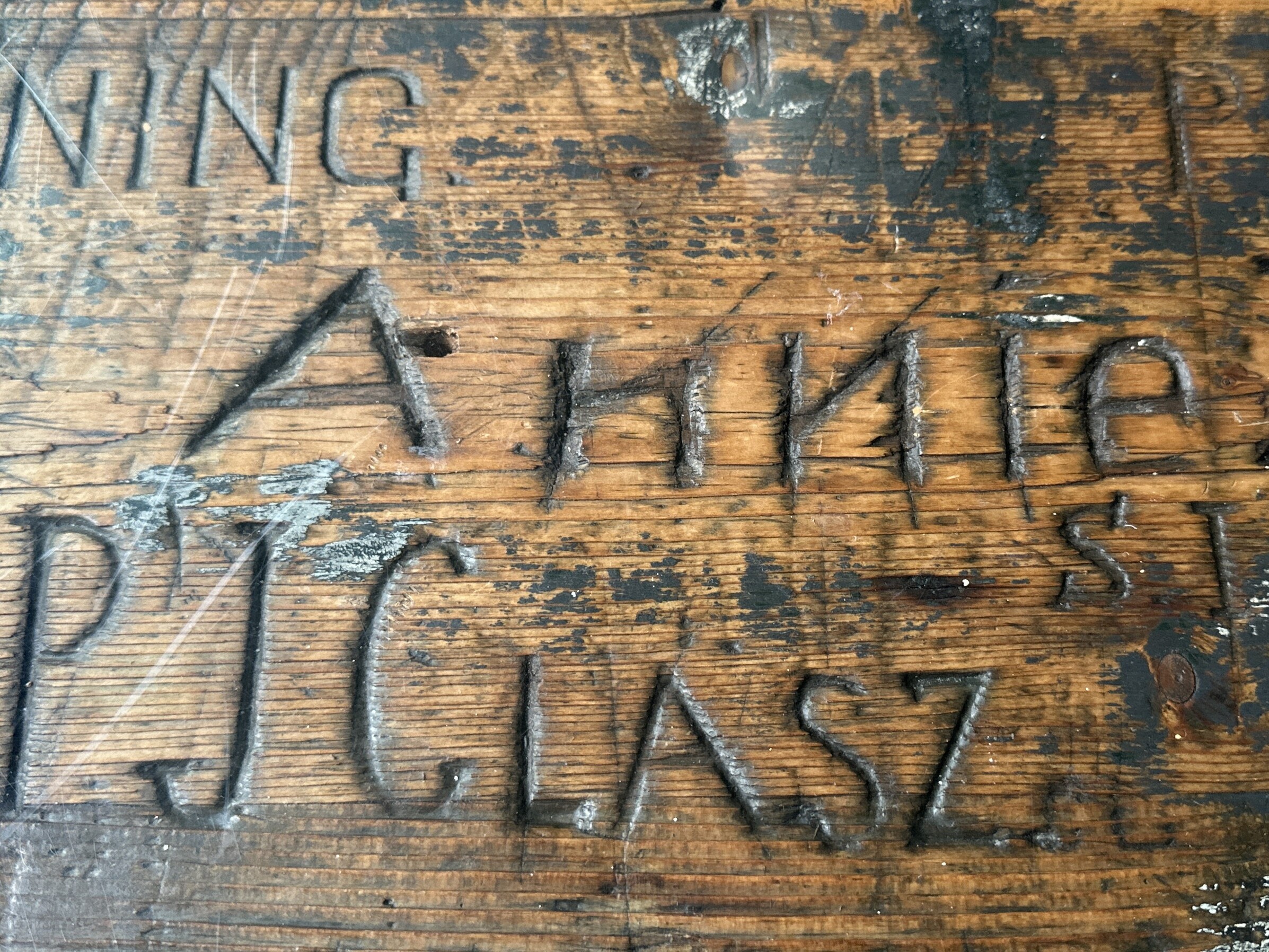
Table belonging to the Doopsgezind Seminarium with signatures of those who completed their studies, amongst which Annie Zernike
Maker and date
Maker unknown
Date unknown
Visit
Can be seen on request in the Doopsgezind Seminarium library room
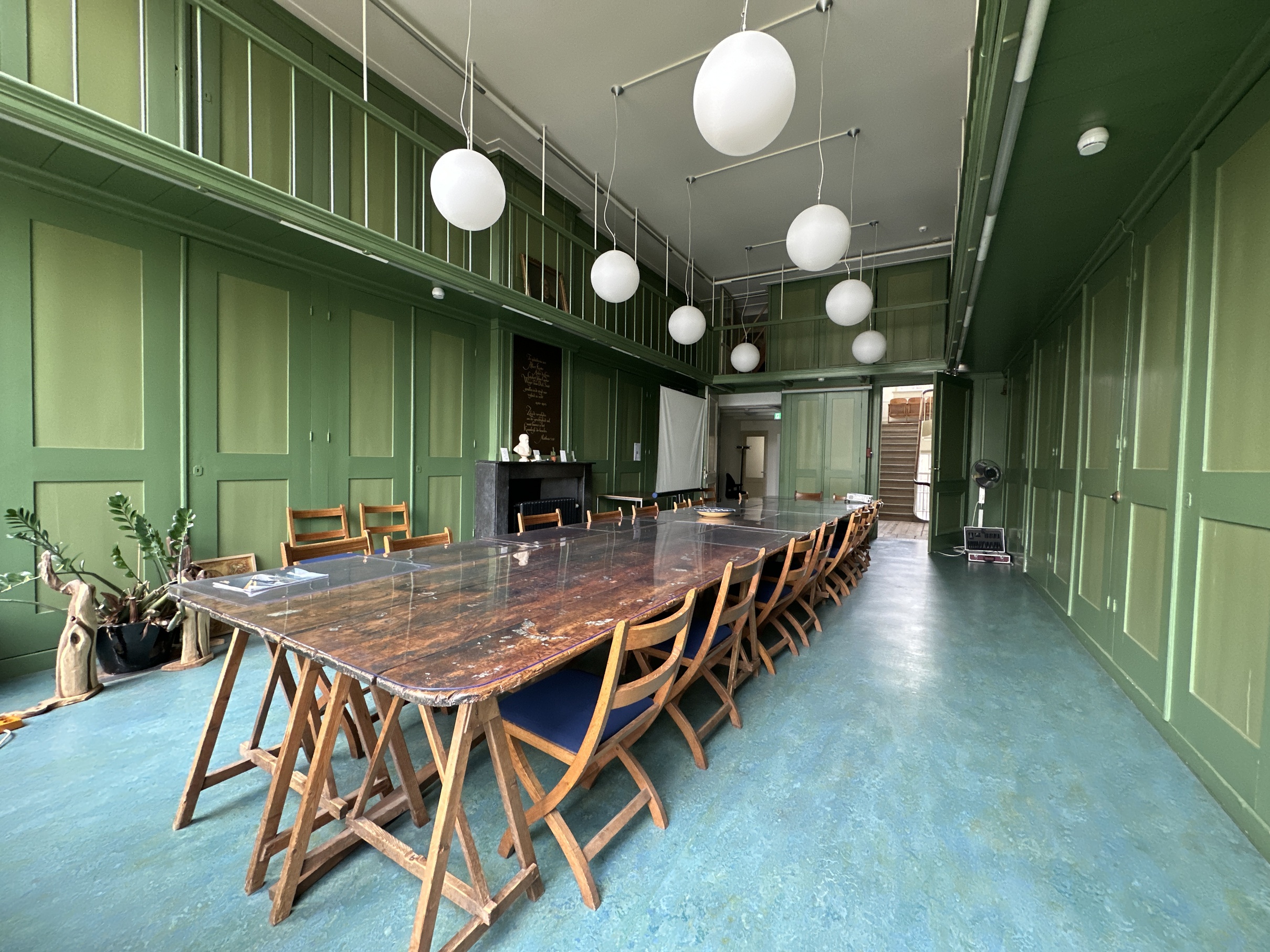
Current interior
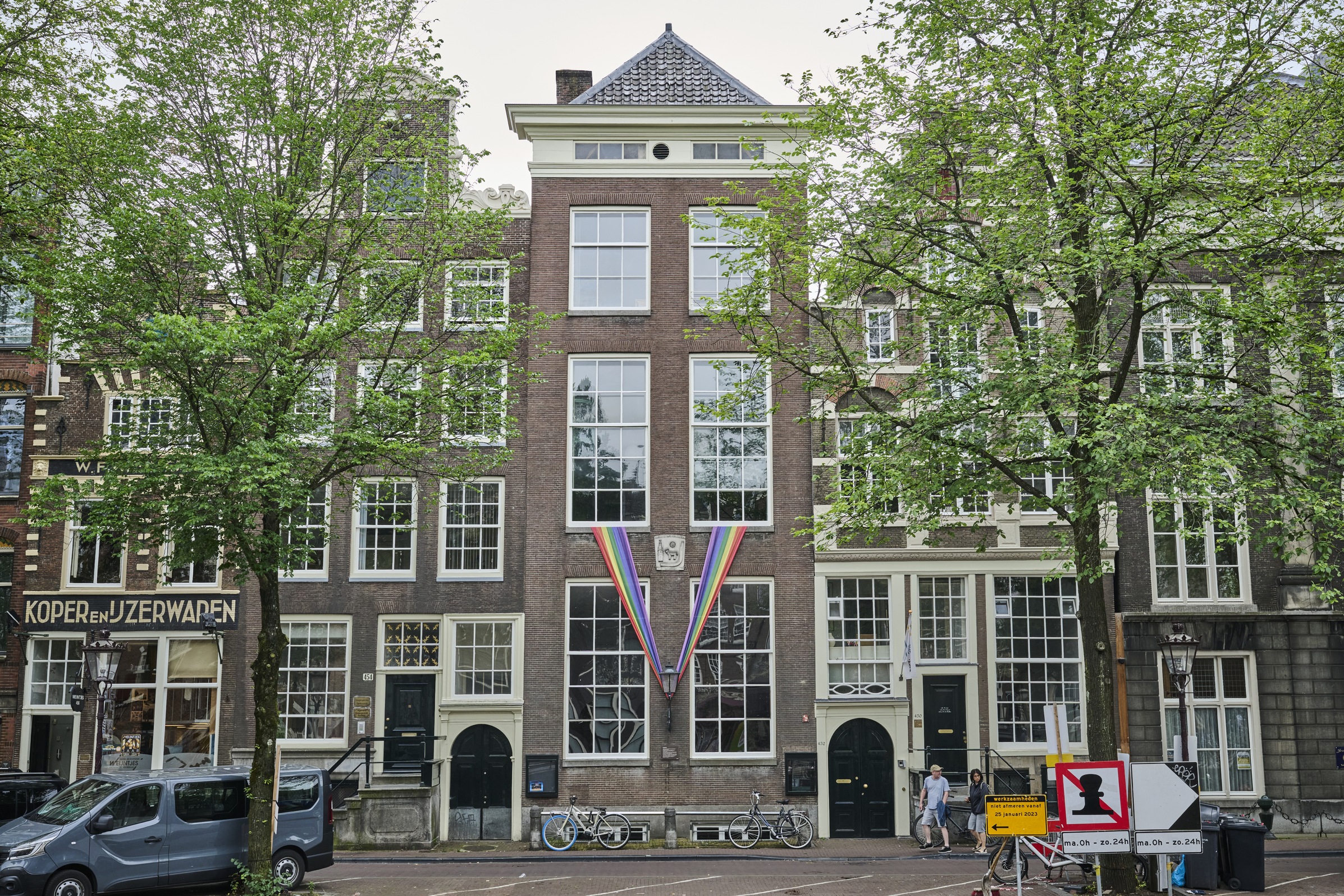
Current exterior
Carvings in the Table: Anne Zernike and the Doopsgezind Seminarium
After much deliberation, the Mennonites were the first denomination in the Netherlands to allow women to get ordained as ministers at their Seminary. Anne Zernike began her studies as the first female theology student at the University of Amsterdam in 1905. She was also admitted to the Doopsgezind Seminarium [Dutch Mennonite Seminary], graduating in 1911. Like other Seminary students who had completed their studies, she carved her name into the institution’s old wooden table
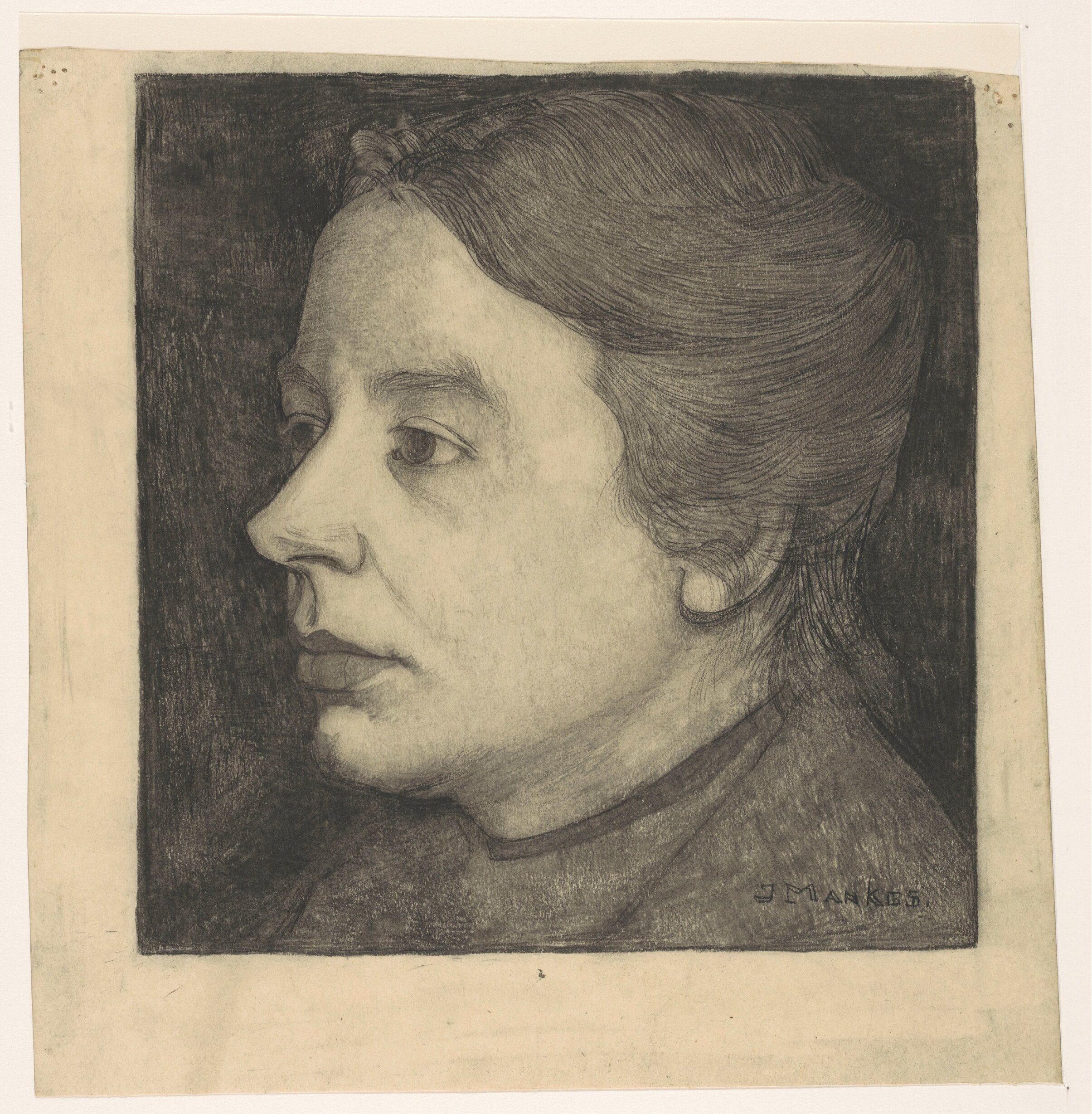
Portrait of Anne Mankes-Zernike, drawn by her husband, the artist Jan Mankes.
Zernike gave her first sermon as the new minister of the Mennonite church in Bovenknijpe on 5 November 1911, and she worked there until her marriage to artist Jan Mankes (1889-1920) in 1915. She went on to get her doctorate in 1918. After the early death of her husband, she continued to work as a minister with the Nederlandse Protestantenbond.
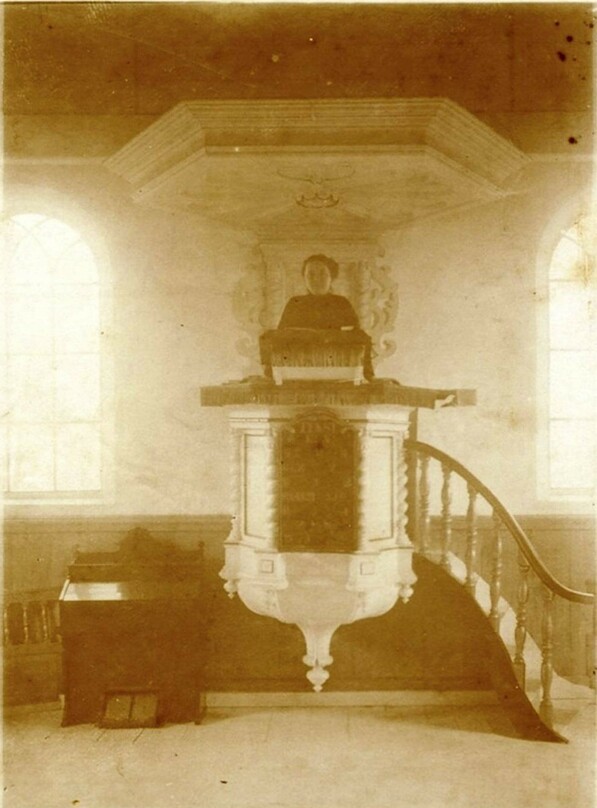
Anne Zernike preaching from the pulpit in the Mennonite Church in Bovenknijpe, Friesland. November 5, 1911.
The Doopsgezind Seminarium is the oldest Mennonite seminary in the world, dating back to 1735. Before this time, congregations were served by unpaid lay ministers often called “leraren” [teachers]. As a non-Reformed religious minority, Mennonites were not allowed to study theology at Dutch universities in the Republic years. However, by the second half of the seventeenth century, there was interest within several Mennonite congregations for more formal minister education. The united Lam and Toren congregation ultimately took matters into their own hands in 1680, allowing their minister Galenus Abrahamsz de Haan to offer some minister training. After his death, students continued their studies at the Remonstrant Seminary, but this was not a long-term solution. When renewed meetings between several congregations again failed, the Lam and Toren congregation formally opened the Seminary on its own. In keeping with Enlightenment thinking, the students studied not only theology but also aspects of philosophy and natural sciences. Some of these courses were offered at the Atheneum Illustre – a forerunner of the University of Amsterdam. In 1811, with the founding of the Algemene Doopsgezinde Sociëteit [national Dutch Mennonite conference], the financial responsibility for the running of the Seminary could be spread more widely. The Seminary’s connection with the UvA was maintained until the twenty-first century when the Theology Faculty closed, and the Seminary reaffiliated with the Vrije Universiteit.
In present times, the students are no longer allowed to carve their names into the historic Seminary table top, but it remains in use in the historic Seminary Library room, where many staff meetings and student gatherings still take place. For many years, the world-class Doopsgezinde Bibliotheek collection was housed in this room. In 1968, the books were moved into the University of Amsterdam’s special collections on long-term loan. Now, the collection is housed nearby at Allard Pierson.
Doopsgezinde Bibliotheek
A world-class research library collection owned by Doopsgezind Amsterdam [the Mennonite congregation of Amsterdam]. It includes rare books related to Mennonite history, theology, and cultural life in the Netherlands as well as several unique artefacts like the only extant handwritten letter by Menno Simons and a pear that a Mennonite martyr passed on to her family member in the sixteenth century. It also includes a robust library of secondary sources on Anabaptist and Mennonite history more broadly.
Nina Schroeder-van 't Schip
Art Historian & Mennonite Heritage Specialist Doopsgezind Amsterdam
Last edited
May 12, 2026
Anonymous, Table belonging to the Doopsgezind Seminarium with signatures of those who completed there studies, ca. 1730. Collection of Doopsgezind Seminarium.
Interior and exterior: photography Our Lord in the Attic Museum.
Jan Mankes, Portrait of Anne Mankes-Zernike, 1899 - 1920, charcoal and black chalk over pencil, 279 mm x 265 mm. Collection of the Rijksmuseum Amsterdam.
Anonymous photographer, Anne Zernike: de eerste vrouw op de kansel, 5 November 1911. Wikimedia Commons.
Brüsewitz, C.F., en J. Brüsewitz, “Sociëteiten en seminarie. Organisatie en onderwijs,” in: Wederdopers, menisten, doopsgezinden in Nederland, 3rd ed. (Zutphen: Walburg pers, 1993) 84-100.
Kühler, W. J. "De oprichting van de Amsterdamsche Kweek-school in 1735" Doopsgezinde Bijdragen (1918) 43-84.
Mankes-Zernike, Anne, Een vrouw in het wondere ambt. Herinneringen van een predikante (Amsterdam, Van Kampen, 1956).
Pitstra, Froukje, Ontelbare enkelvouden: Dr. Anne Mankes-Zernike (1887-1972) een biografie (Zoetermeer: Uitgeverij Meinema, 2014).
Online sources
Rijksmuseum: Portret van Anne Mankes-Zernike
Last visited 30-04-2026
Global Anabaptist Mennonite Encyclopedia Online: Amsterdam Mennonite Theological Seminary (Kweekschool)
Last visited 30-04-2026