

 Christianity Protestant
A former hardtack bakehouse was used as the meeting place for a group of English migrants who became the "English section" [Engelse afdeling] of the Dutch Waterlander Mennonites. It was this merger that prompted the compilation of the so-called "Short Confession of Faith".
Location
Bakehouse
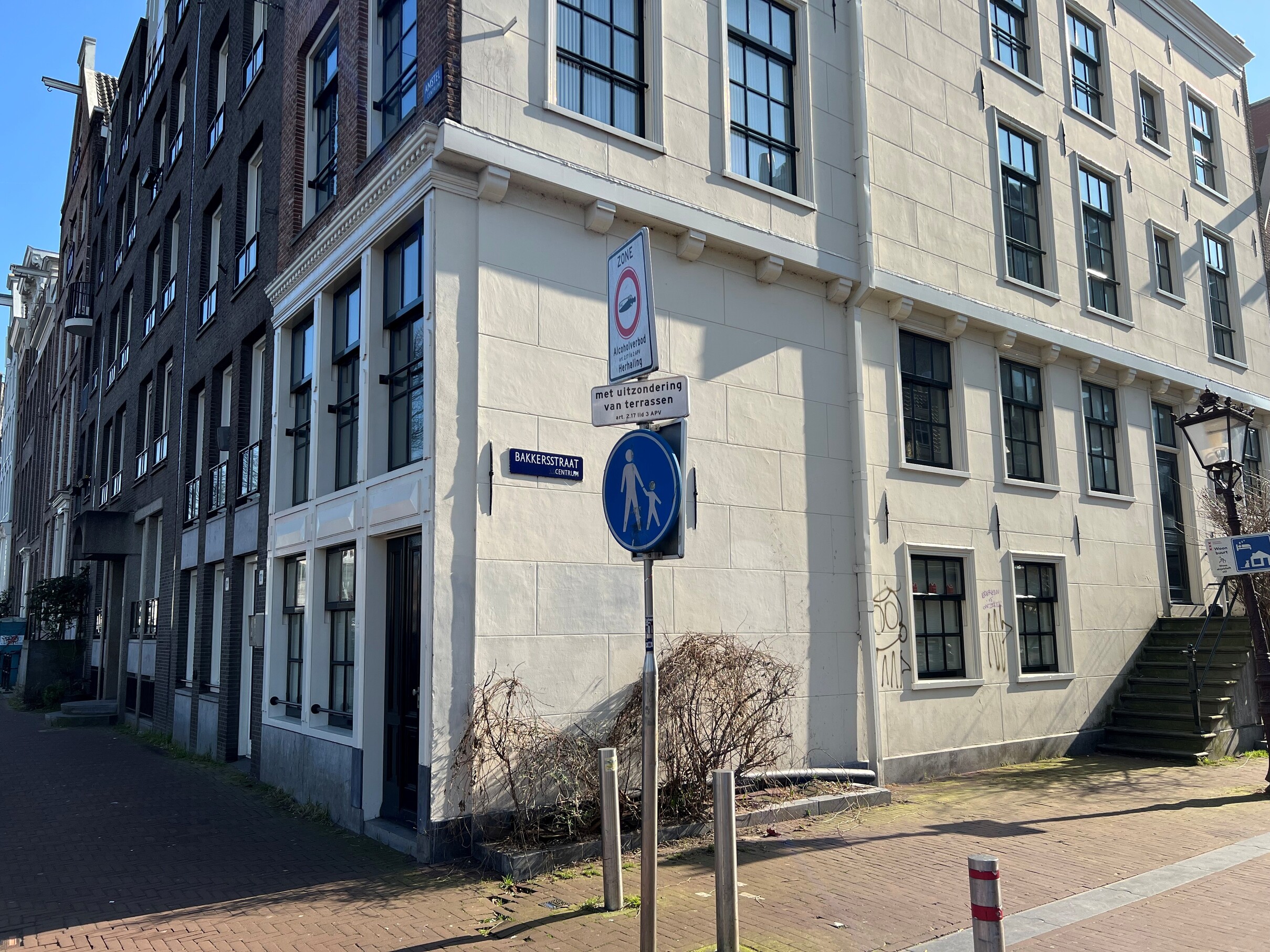
Amstel 122
Type
Hidden church
Religious community
Mennonite Church
Object
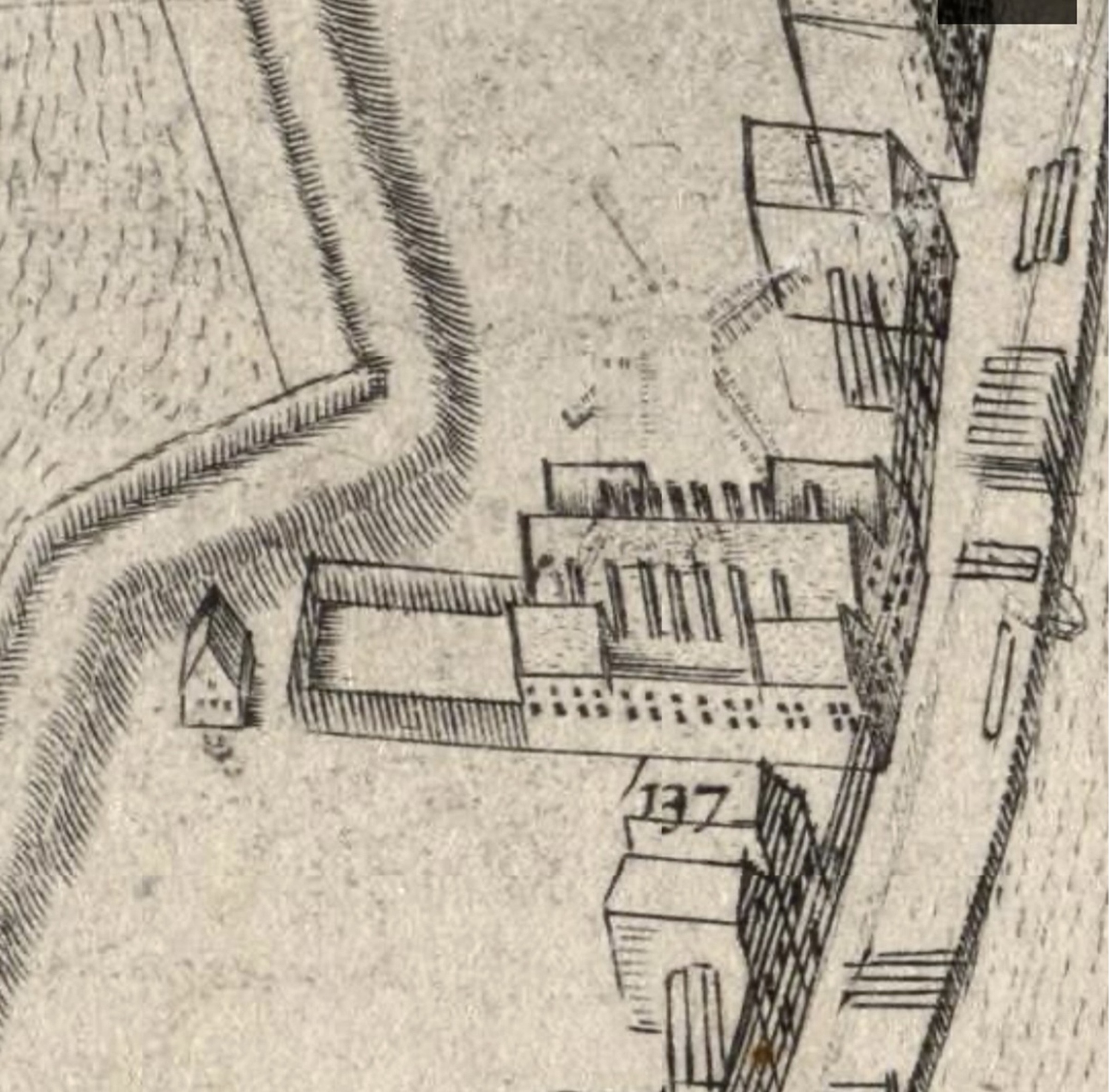
Map showing the location where English Mennonites met until ca. 1640, and which later served to house poorer congregants.
Maker and date
Pieter Bast
1599
Visit
The book in which the map is included can be consulted at the City Archives. Archive number: KOG-AA-3-01-02-3
Current exterior
English Mennonites at the Bakehouse: John Smyth, the “Short Confession of Faith,” and the “English Section” of the Waterlander Congregation
In 1608, John Smyth and a group of other English migrants moved to Amsterdam together. Like some other English Puritans and Separatists, they were seeking out religious tolerance. Smyth, who had been a cleric in the Church of England, had become a Brownist. Then, in the Netherlands, he came to question infant baptism. He baptized himself, and then baptized Thomas Helwys, and others who were within his congregation.
Puritans
Otherwise known as English Calvinists or English Reformed. Many Puritans stayed in Great Britain, while others sought out more religious tolerance by journeying to the Netherlands and to America in the early modern period. For their part, many remained critical about other minority English Separatist or Dissenter groups. For example, John Paget, first minister of the English Reformed Church of Amsterdam was very outspoken in his criticism of Smyth, the Brownists, Anabaptists, and other Separatists.
Brownists
A Christian group named after Robert Browne that emerged in sixteenth-century England. They were considered Dissenters or Separatists. Some Brownists migrated from England to the Dutch Republic in the early modern period.
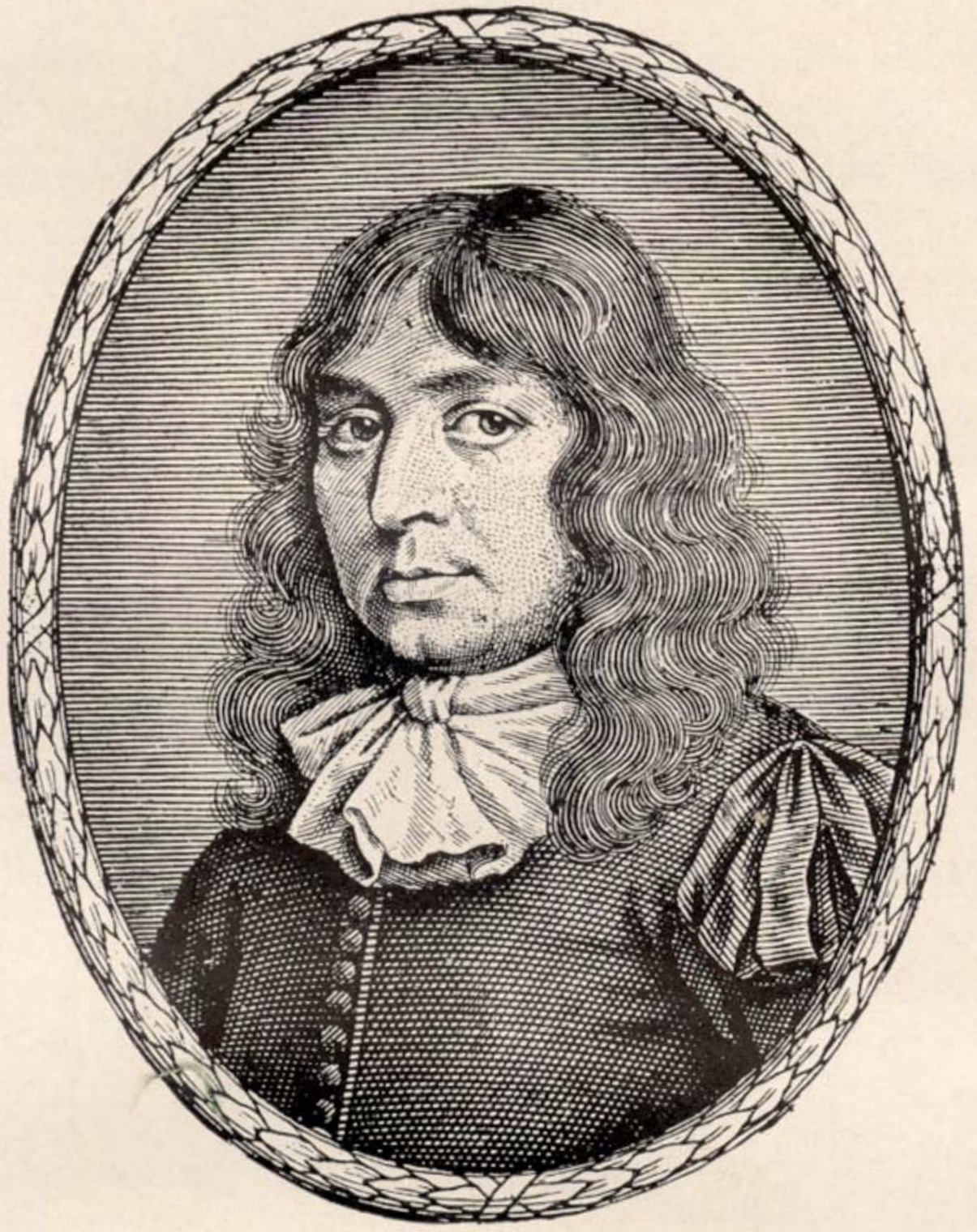
Possible portrait of John Smyth
Shortly after their arrival, the Smythites began gathering in a building that had been the former Grote Bakhuis (Great Bakehouse) of hardtack for the Compagnie van Verre, which was a forerunner of the VOC (Dutch East India Company). Many also lived in cottages on the premises. By 1610, the Bakehouse property was in the hands of Waterlander Mennonite merchant and ship owner Jan Munter of the Toren congregation. At the time, this part of town was a fairly inexpensive area with a smattering of houses, warehouses, and distilleries.
Smyth and his followers soon communicated their desire to formally join the Waterlander Mennonite congregation. The ministers Lubbert Gerritsz. and Reynier Wybrandtsz. brought in fellow Waterlander leader Hans de Ries from Alkmaar to help with the union. The “Short Confession of Faith” was drawn up as the basis for exploring their shared beliefs. Some of the Waterlanders had their hesitations, and Helwys was particularly outspoken in his disagreement about the merger. He ultimately went back to England with a small portion of the English group, and they founded the first English Baptist church. Finally, in 1615, a few years after the deaths of both Smyth and Gerritsz. in 1612, the Waterlanders welcomed thirty English members into membership.
Waterlanders
A group of Dutch Mennonites who originally came from the Waterland region in North Holland. After the early years of the movement, the group spread widely to other regions. Thus, the name connoted a particular sub-group of the Mennonite/Doopsgezind movement rather than a geographical characteristic. Since a schism on matters of the ban with stricter Mennonites in the 1550s, the Waterlanders choose instead to call themselves Doopsgezinden (baptism community/baptism-minded). Over the years, other more progressive groups among Mennonites likewise tended to go by the name Doopsgezind – though in a variety of contexts it was used interchangeably.
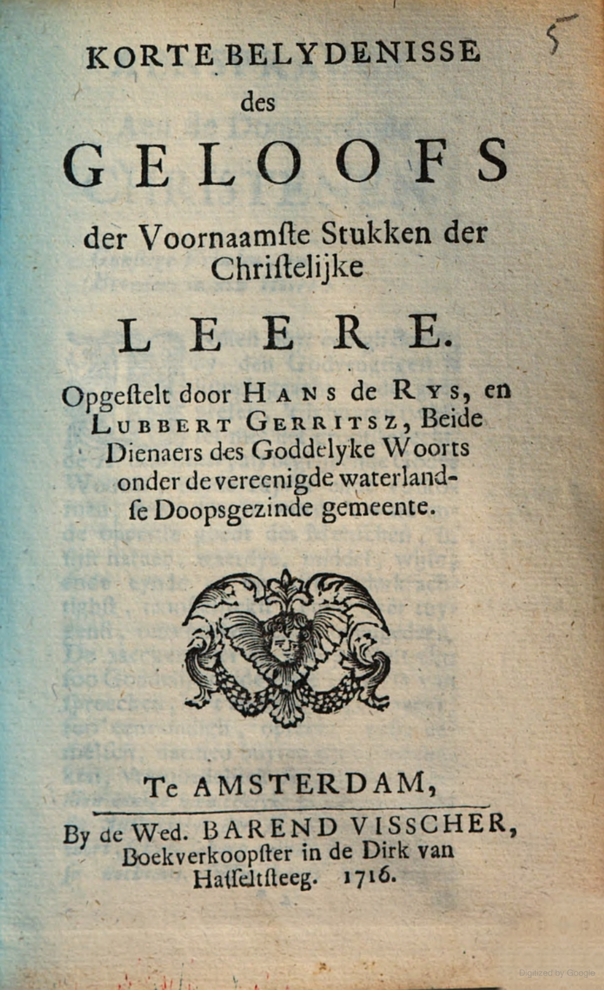
Titlepage of a 1716 edition of Hans de Ries and Lubbert Gerritsz., Korte belydenisse des geloofs der voornaamste stukken der christelijke leere (Short Confession of Faith), first compiled in 1610.
Known as the “Engelse afdeling” (English section) of the Waterlander congregation, the group continued to worship at the Bakehouse under the leadership of Thomas Pigott. Pigott, who had taken over from Smyth, was ordained by Waterlander elder Pieter Andriesz. Hesseling in 1620 and served until his death in 1639. By then, the Dutch language barrier was not such a big issue for most of the migrant group, and the congregation soon began attending the Dutch services at the Toren. The Waterlander church took ownership of the Bakehouse property from around 1640 until 1709 and the property became a Mennonite house for the poor.
While the Bakehouse quickly became integrated into Mennonite life within Amsterdam, the earliest portions of the story, surrounding Smyth and Helwys, continue to be celebrated as key historical moments among the Baptists and other Free Church groups who practice Believer’s Baptism.
Waterlanders
A group of Dutch Mennonites who originally came from the Waterland region in North Holland. After the early years of the movement, the group spread widely to other regions. Thus, the name connoted a particular sub-group of the Mennonite/Doopsgezind movement rather than a geographical characteristic. Since a schism on matters of the ban with stricter Mennonites in the 1550s, the Waterlanders choose instead to call themselves Doopsgezinden (baptism community/baptism-minded). Over the years, other more progressive groups among Mennonites likewise tended to go by the name Doopsgezind – though in a variety of contexts it was used interchangeably.
Believer's Baptism
Otherwise known as adult baptism or baptism upon confession of faith.
Elder (Mennonite usage)
Historically, this was the position of highest authority within Mennonite leadership, and with jurisdiction over a large number of congregations or conferences. Elders had the authority to baptize, give communion, administer church discipline, and ordain ministers. They also did tasks like preaching, which local ministers did as well.
In the Dutch context, this role gradually disappeared in the eighteenth century with the shift to hiring paid, seminary-trained ministers.
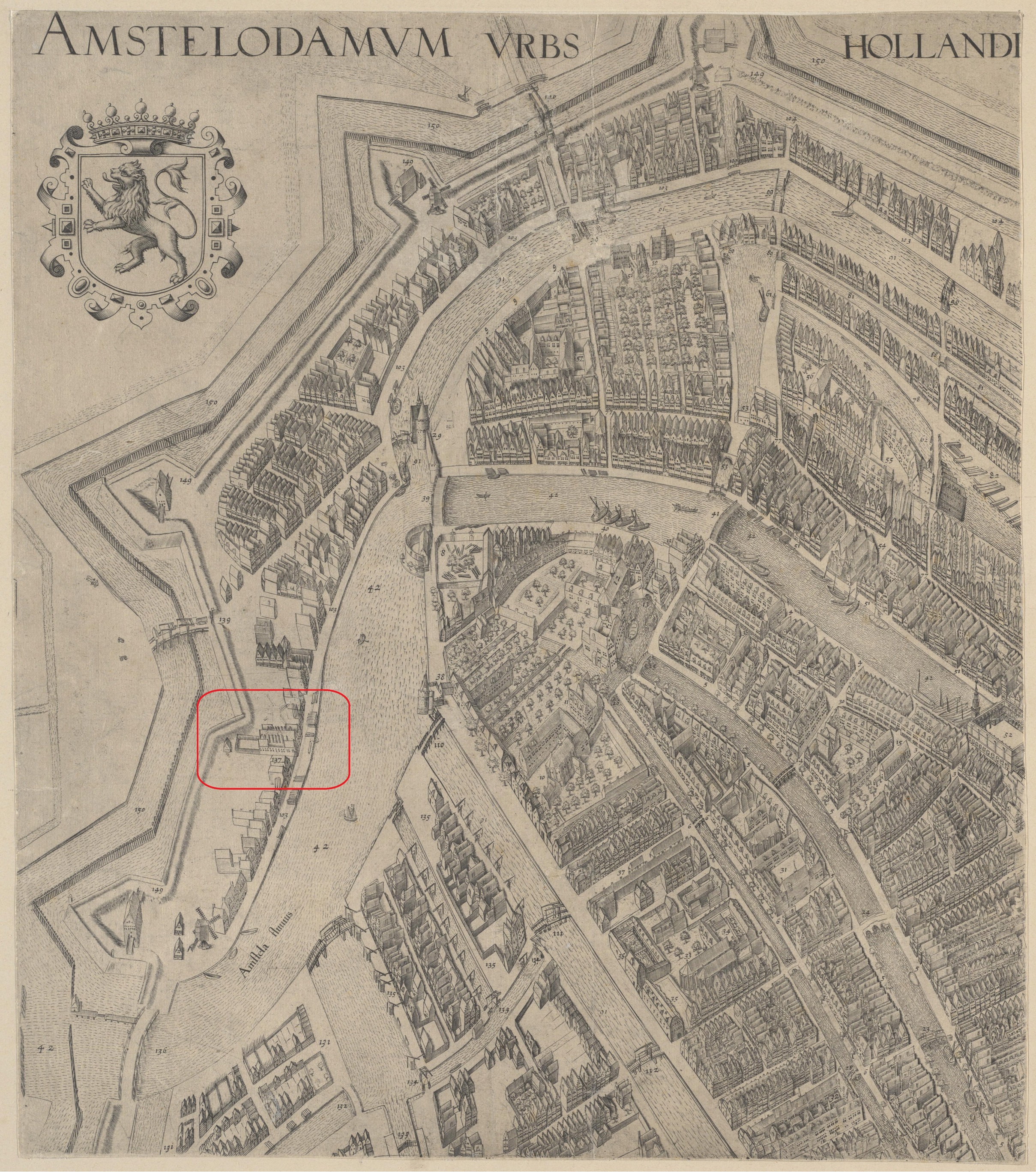
Map of Amsterdam (Amstelodamum urbs Hollandiae Primaria Emporium Totius Europae Celeberrimum) from 1617. It depicts Amsterdam as it looked at the time of original publication in 1599. The Bakehouse is located within the red rectangle.
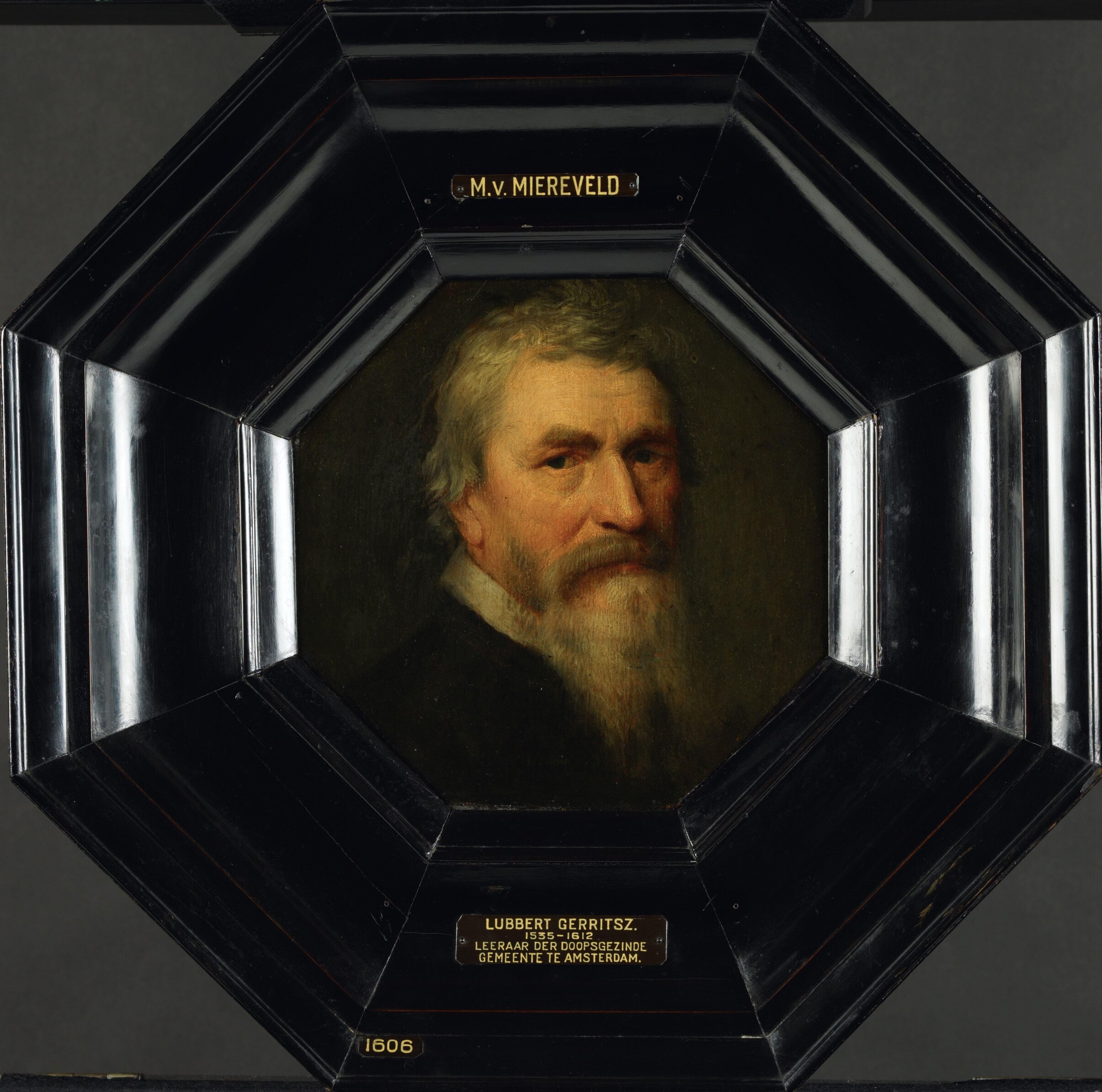
Portrait of Lubbert Gerritsz. (1535-1612), by Mennonite artist Michiel van Mierevelt.
Nina Schroeder-van 't Schip
Art Historian & Mennonite Heritage Specialist Doopsgezind Amsterdam
Last edited
March 25, 2026
A map detail showing the bakehouse as it looked in 1599. Claes Jansz. Visscher after Pieter Bast, Amstelodamum urbs Hollandiae Primaria Emporium Totius Europae Celeberrimum (1617 5th edition). Collection of Koninklijk Oudheidkundig Genootschap, Stadsarchief Amsterdam. KOG-AA-3-01-02-3.
Possible portrait of John Smyth, unknown maker, unknown date. Via Wikimedia, CC BY-SA.
Titlepage of a later edition of Hans de Ries and Lubbert Gerritsz., Korte belydenisse des geloofs der voornaamste stukken der christelijke leere (“Short Confession of Faith”), first compiled in 1610 (Amsterdam 1716).
Claes Jansz. Visscher after Pieter Bast, Amstelodamum urbs Hollandiae Primaria Emporium Totius Europae Celeberrimum (1617 5th edition). Collection of Koninklijk Oudheidkundig Genootschap, Stadsarchief Amsterdam. KOG-AA-3-01-02-3.
Portret van Lubbert Gerritsz. (1535-1612), workshop of Michiel Jansz van Mierevelt, after c. 1607, oil on panel. Collection of Rijksmuseum Amsterdam. SK-A-762.
Sprunger, Keith L., en Mary S. Sprunger, “The Church in the Bakehouse: John Smyth’s English Anabaptist Community at Amsterdam, 1609-1660,” in: Mennonite Quarterly Review, 85 (2011) 219-258.
Sprunger, Keith L., Dutch Puritanism: A History of English and Scottish Churches of the Netherlands in the Sixteenth and Seventeenth Centuries (Leiden 1982).
De Hoop Scheffer, J.G., “De Brownisten te Amsterdam gedurende den eersten tijd na hunne vestiging, in verband met het ontstaan van de broederschap der Baptisten,” in:Verslagen en Mededeelingen van de Koninklijk Academie van Wetenschappen afd. Letterkunde (1881) 348-349.
Koop, Karl, Confessions of Faith in the Anabaptist Tradition: 1527-1660 (Kitchener 2006) 135-156.
Lee, Jason K., The Theology of John Smyth: Puritan, Separatist, Baptist, Mennonite, (Macon 2003).
De Ries, Hans en Lubbert Gerritsz, Korte belydenisse des geloofs der voornaamste stukken der christelijke leere (Amsterdam 1716).
Online sources
Stadsarchief Amsterdam: Amstelodamum urbs Hollandiae Primaria Emporium Totius Europae Celeberrimum (5e uitgave)
Last visited 04-03-2026
Rijksmuseum: Portret van Lubbert Gerritsz (1535-1612)
Last visited 04-03-2026